 Buy the Book: Print
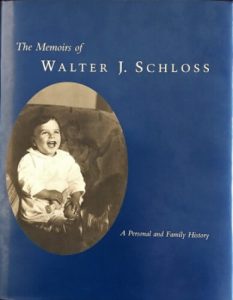
Walter Schloss shares stories and lessons from his life growing up in New York, getting his first job on Wall Street, enlisting in WWII, returning to work for Ben Graham, and successfully running his own partnership for 47 years.

·
Buy the Book: Print
Walter Schloss shares stories and lessons from his life growing up in New York, getting his first job on Wall Street, enlisting in WWII, returning to work for Ben Graham, and successfully running his own partnership for 47 years.
·
Anyone who got the investing itch in the ’80s or ’90s followed Peter Lynch at some point. He was the last star mutual fund manager — who left the game early and for the right reasons. Lynch played at a higher level than everyone else.
One of the best examples of this, that I’ve come across, was in the 1988 Baron’s Roundtable discussion. Ten fund managers gathered in the same room to start the year. You might recognize a few — Mario Gabelli, Paul Tudor Jones, John Neff, Michael Price, Jim Rogers, and, of course, Peter Lynch.
It’s three months after the ’87 crash. They’re jittery. They argue about what’s next for the economy, oil prices, interest rates, inflation, trade deficit, and the stock market. Six hours of “what if there’s a recession or another crash?” Basically, the crap you hear on CNBC every day.
And then there’s Lynch — I picture him sitting quietly, smirking. Finally, he interrupts:
There’s always something to worry about. But it’s garbage to worry about these things… You have to look at corporate profits, and see what’s going on in the companies. It’s total garbage to worry about the things that’s going to drive us to a 300 Dow. It’ll be something you couldn’t imagine if you picked the brightest or dumbest people in the world and assembled them for hours.
Lynch took a shot at the Roundtable itself and made his point. There’s always something to worry about in investing. But it’s a waste of time and energy because we won’t predict it correctly. Continue Reading…
·
Ferdinand Pecora was the counsel for the Senate Committee on Banking and Currency investigation in 1933. His book lays out its findings on the widespread speculative, and manipulative, stock market practices leading up to 1929 and the market crash that followed.
·
The rise in popularity of new financial products often coincides with the rising popularity of stocks. And if one takes off, you’re bound to get more.
One of the first examples of this in the U.S. was investment trusts in the 1920s. Investment trusts are a type of fund that got their start in the U.K. in the 1860s.
The first trust of any significance was created in the U.S. in 1924. One of the main selling points was the benefit of a professional investing your money for you. As the 1920s rolled on, another point emerged on how trusts would be a stabilizing force for the stock market during a decline.
Trusts were not an immediate hit. Only $175 million were in investment trusts in 1927. That all changed within a year. The number jumped to $790 million in 1928. Then it hit $2.25 billion in 1929 and represented 22% of all stock issues. In fact, the number of investment trusts more than doubled from 172 at the start of 1929 to over 400 by the end of August of the same year. And more investment trust securities were offered in September 1929 than in August.
But the love affair investors had with investment trusts was short-lived. Like many investment fads, there are always a few bad apples that spoil the bunch. Of all the investment trusts, one stands out as the most egregious. Continue Reading…
·
Everything aligned perfectly for Frank Taplin. He owned shares in a small railroad, controlling a strategic corridor, in the merger mania of 1929. The battle for Taplin’s little railroad is a story of the excesses of the late 1920s stock market frenzy.
The New Era of the late 1920s saw demand for stocks like no other. Investment banks supplied the demand in innovative ways. One way was through the use of a holding company.
A holding company is exactly like sounds. It produces nothing. It provides no services. It simply holds and votes the shares of other businesses. In return, the holding company issues shares to the public supplying the demand for more shares.
One such holding company was the Allegany Corporation. It was created by the Van Sweringen brothers, with the help of J.P. Morgan and Company in January 1929. Its purpose was to hold railroad interests.
The Allegany Corporation was unique in that it wasn’t offered to the public but to J.P. Morgan’s “preferred list.” It was a who’s who of men in power and influence in the country. J.P. Morgan offered shares at cost to those on the list, with the understanding that the stock would be trading on the public market, at a profit, in the very near future. No strings attached. Continue Reading…
·
Ed Thorp’s journey to investing began in a casino. It started by questioning the conventional wisdom that the game couldn’t be beaten. Thorp proved it could.
The game was blackjack. His strategy for counting cards gave the player an edge over the house. He published the strategy in Beat the Dealer, which became a best seller. It was proof that a tiny edge can compound a small bankroll into a fortune over time.
Less well-known is that Thorp beat the game of roulette too. With the help of Claude Shannon, Thorp created a wearable computer that predicted where the ball would land. It gave them a 44% expected gain playing roulette.
Thorp’s proclivity to question conventional wisdom pushed him toward markets. His early foray into investing was a hedging strategy using warrants, options, and convertible bonds and preferreds, which was written about in Beat the Market. He averaged 25% mostly investing for himself and friends and family.
He started Princeton/Newport Partners in 1969. He continued his warrant strategy while adding an options formula — basically, Black-Scholes before Black and Scholes figured it out — along with a third strategy he could use depending on the situation. It became a race to stay ahead of academia until he closed up shop in 1989. Continue Reading…
 Buy the Book: