 Buy the Book:
 Thomas Gibson’s 1909 classic breaks down the market cycles of the 1800s, the speculative behavior behind them, and the typical errors speculators make each step of the way.

-
Peter Lynch on Common Investor Mistakes
·
Peter Lynch was a legend who beat the market in a way few greats could do. From 1977 to 1990, he averaged a 29.7% return with the Magellan Fund. It was the best-performing fund of the 1980s.
And yet, Lynch made mistakes. He jokingly admits to it often. He just did mistakes better than most investors too. Lucky for us, he had a knack for simplifying the difficulties of investing.
His ability to cut to the heart of what it takes to make money, in the long run, is refreshing. And yet it’s still mostly ignored because the riches don’t come quick enough.
As a guest on Wall Street Week, in 1990, he explained why patience is key. It was one of several common mistakes he covered during the segment. Be it market timing, predictions, not knowing what you own, or lack of effort, the mistakes are universal. Lynch’s take is a good reminder of the trouble we can get ourselves into at times. Continue Reading…
-
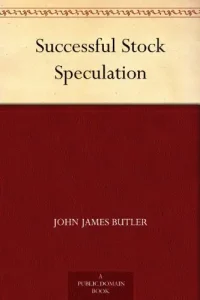
Successful Stock Speculation by J.J. Butler
·
The 1922 investing classic offers an introduction to new investors and sits as a reminder that the basic investment principles have remained the same over the past century.
The Notes
-
Skill vs. Luck: Failing to Lose
·
Purposely losing money in the stock market seems like it should be an easy task. It turns out it takes some luck to lose money in the market. The same goes for making it.
Michael Mauboussin defines pure skill-based activities as those where you can lose on purpose. Chess is pure skill. It takes years of learning and practice to become just good at chess. However, a master chess player can lose on purpose to anyone.
Whereas the lottery is pure luck. It’s a random draw. You can pick a series of numbers and hope to lose but there’s always a chance you get lucky and win.
Investing falls somewhere in between pure skill and pure luck because the amount of noise in the system makes it hard to lose (or win) on purpose in the short run.
A good example of this is an interesting experiment run by John Rogers and his team several years ago: Continue Reading…
-
Edwin Lefevre: Investor, Speculator, or Gambler?
·
Ben Graham often explained the difference between investors and speculators.
An investor looks for investments that provide safety and a solid return. A speculator tries to profit off market moves.
Edwin Lefevre had a similar view. Though, he added a third option for good reason. He separated gamblers from speculators because he saw a pattern of gambling emerge during bull markets.
Here’s how he defined each following the 1929 crash: Continue Reading…
-
Learning the Wrong Lessons
·
There’s a risk that investors learn the wrong lessons from recent market cycles. One of the biggest wrong lessons is that the market always quickly recovers.
Of course, quick recoveries have defined the stock market since the 2008 financial crisis. The 2009 bottom led to the longest bull market ever and the buy the dip mantra (BTFD) grew from that period. The 2020 crash solidified it.
It would come as no surprise if investors expected recent history to repeat itself. Of course, investors often mistakenly rely on recent history or lived experience to make decisions, as if it’s the only history that matters.
In fact, Seth Klarman noted this specific false lesson in 2010:
Bad things happen, but really bad things do not. Do buy the dips, especially the lowest quality securities when they come under pressure, because declines will quickly be reversed.
Howard Marks shared a similar thought in his book Mastering the Market Cycle: Continue Reading…
 Buy the Book: