
Novel Investor
  • Home
  • About
  • Invest with Me
  • Resources
  • Weekend Reads – 11/15/24

    November 15, 2024

    ·

    Jon

    Quote for the Week

    It is a great mistake to believe that a speculation has been unwise if you lose money at it. That sounds like an obvious conclusion, but actually it is not true at all. A speculation is unwise only if it is made on insufficient study and by poor judgment. I recall to those of you who are bridge players the emphasis that the bridge experts place on playing a hand right rather than on playing it successfully. Because, as you know, if you play it right you are going to make money and if you play it wrong you lose money — in the long run.

    There is a beautiful little story, that I suppose most of you have heard, about the man who was the weaker bridge player of the husband-and-wife team. It seems he bid a grand slam, and at the end he said very triumphantly to his wife, “I saw you making faces at me all the time, but you notice I not only bid this grand slam but I made it. What can you say about that?” And his wife replied very dourly, “If you had played it right you would have lost it.”

    There is a great deal of that in Wall Street, particularly in the field of speculation, when you are trying to do it by careful calculation. In some cases the thing will work out badly. But that is simply part of the game. If it was bound to work out rightly, it wouldn’t be a speculation at all, and there wouldn’t be the opportunities of profit that inhere in sound speculation. It seems to me that is axiomatic. — Ben Graham (source)
    Continue Reading…


  • Failing to Succeed

    November 13, 2024

    ·

    Jon

    Some of the greatest businesses are defined by the chances they take to prevent the business from becoming stagnant. We see the successes but it’s the little failures along the way that drive their success.

    That willingness to fail plays an important role in a business’s survival. In fact, the opposite often seals a company’s demise.

    Creative destruction is a natural process that wipes out companies all the time. Complacency does too. Some of the greatest companies of the last century disappeared because management found unique ways to rest on their laurels.

    The company finds early success doing something different, grows to an immense size, and becomes an industry leader. After a few decades, management becomes arrogant, complacent, and comfortable. Bureaucracy creeps in. Before they know it, some new upstart, more willing to take risks, has passed them by.

    Sears, Xerox, and Kodak are three examples from a long list of once-great companies where management quit taking risks. They avoided the uncomfortableness of failure and ceased to stay relevant. Continue Reading…


  • Weekend Reads – 11/8/24

    November 8, 2024

    ·

    Jon

    Quote for the Week

    I don’t remember the exact year, maybe 2005 or 2006, David Swenson and I were having lunch. I said, “David, this is going to surprise you but I’m concerned that you may be too careful, too defensive, too protective. I just wonder; should you be a little bit more assertive and take a little more risk?” He said, “Honestly, I don’t know. But I do know one thing. Just about the time you think there’s never going to be a horrific negative surprise, one comes barreling along. I may be too careful. I may be too protective. I may be too defensive. Though knowing history, I think it’s probably a pretty good idea.”

    So when the horrible experience came slamming through, it wasn’t that he was really prepared for that specific one, but he was well prepared for real difficulties…

    There’s a lot to be careful about. Many see “be careful” as not doing things that are bold or courageous or creative. That’s not the right way to be careful. You should be bold, creative, and courageous, but disciplined and know exactly what you’re doing. — Charles Ellis (source)

    Continue Reading…


  • Wise Words on Market Uncertainty

    November 6, 2024

    ·

    Jon

    Uncertainty is built into every complex system. It’s open-ended. It’s unpredictable.

    We face uncertainty when the data we base decisions on only looks backward. This is the crux of investing and why so many great investors have shared thoughts on handling uncertainty.

    All the historical market data in the world tells us little about what lies ahead. That’s not to say historical data is useless. It’s…incomplete. We can learn how past events played out, how people reacted to those events, and use that to inform our decisions.

    The downside is that history makes things appear predictable. Hindsight makes it easy to explain past events in a tidy way that eliminates the uncertainty and randomness that prevailed at every moment. What happened was bound to happen. The outcome was all but certain. That thought process leads to overconfidence in our ability to predict future outcomes.

    Of course, businesses emerged over a century ago within finance to fill the need for certainty. They turned hindsight into a convincing story about the future. Today, forecasters, modelers, and charlatans abound with predictions for markets, the economy, and everything else. When they’re right, they’re praised. When they’re wrong — they usually are — people ignore that they are wrong and listen anyway. Continue Reading…


  • Weekend Reads – 11/1/24

    November 1, 2024

    ·

    Jon

    Quote for the Week

    It was the publication of E.L. Smith’s little book entitled, “Common Stocks as Long-Term Investments.” His study showed that, contrary to prevalent beliefs, equities as a whole had proved much better purchases than bonds during the preceding half-century. It is generally held that these findings provided the theoretical and psychological justification for the ensuing bull market of the 1920’s. The Dow Jones Industrial Average (DJIA), which stood at 90 in mid-1924, advanced to 381 by September 1929, from which high estate it collapsed — as I remember only too well — to an ignominious low of 41 in 1932.

    On that date the market’s level was the lowest it had registered for more than 30 years. For both General Electric and for the Dow, the high point of 1929 was not to be regained for 25 years.

    Here was a striking example of the calamity that can ensue when reasoning that is entirely sound when applied to past conditions is blindly followed long after the relevant conditions have changed. What was true of the attractiveness of equity investments when the Dow stood at 90 was doubtful when the level had advanced to 200 and was completely untrue at 300 or higher. — Ben Graham (source)

    Continue Reading…


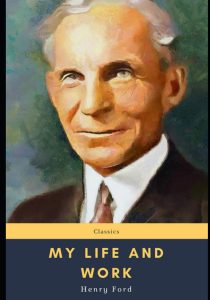
  • My Life and Work by Henry Ford

    October 31, 2024

    ·

    "My Life and Work" book coverBuy the Book: Print | eBook

    Henry Ford tells his life story and the founding of the Ford Motor Company. He shares the business philosophy and practices that transformed manufacturing and dominated the emerging auto industry.

    The Notes

    Continue Reading…


Previous Page
1 … 19 20 21 22 23 … 232
Next Page

Join the library.

Access over 1,100 research papers, writings, transcripts, and more from the brightest minds in finance.

Learn More

Learning

  • Investor Library
  • Book Notes
  • Investor Quotes

Return Quilts

  • Asset Class Returns
  • S&P Sector Returns
  • International Stock Market Returns
  • Emerging Markets Returns
  • Historical Returns Data

Connect

  • Bluesky
  • Twitter
  • Facebook
  • RSS Feed
  • Home
  • About
  • Contact

© Novel Investor · All Rights Reserved · Terms of Use · Privacy Policy · Disclaimer