
Novel Investor
  • Home
  • About
  • Invest with Me
  • Resources
  • Weekend Reads – 2/2/24

    February 2, 2024

    ·

    Jon

    Quote for the Week

    Investors are right and wrong all the time for the wrong reasons. We all know people who got famous in our business for being right once in row. The correctness of a decision cannot be judged merely from the outcome. Good decisions fail all the time. Bad decisions work all the time. Randomness alone can produce just about any outcome in the short run. It is for reasons like these that we must be leery about attaching great importance to short-term performance.

    Instead you must appreciate what Taleb in his book calls alternative histories — the other things that reasonably, probably could have happened. The difficulty of seeing events as nothing more than part of a range of possibilities must be dealt with, and if we can understand that, then we reduce the significance we attach to the events that actually happened. If short-term outperformance or underperformance is of limited relevance, what matters? Long term, it is not who can only do it once or who can do it for a year. It is who can do it for 10 years or maybe 20. These are the people who are worth our attention. — Howard Marks (source)
    Continue Reading…


  • Buying Disney’s World by Aaron Goldberg

    January 31, 2024

    ·

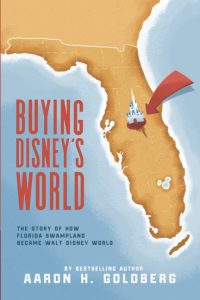
    Buying Disney's World book coverBuy the Book: Print | eBook

    Walt Disney wanted a second chance to recreate Disneyland the right way — bigger, better, and with total control of the surrounding environment. He found that opportunity in Florida. The story of Walt Disney World is one of big dreams, secrecy, and financial ingenuity.

    The Notes

    Continue Reading…


  • Weekend Reads – 1/26/24

    January 26, 2024

    ·

    Jon

    Quote for the Week

    What the economists call fabrication or demand in use is inversely correlated with price. Or, more simply, you know, if gasoline prices go up, other things equal, you’re going to drive less. So price and demand are inversely correlated: basic economics. And that’s the way it is for things that are used. But in financial markets, it isn’t the case. That actually, demand is positively correlated with price. More people buy things when they go up; if stocks start to go up, more people want them than if they’re going down. The higher they go up, the greater the demand for them. That’s why you see people chasing mutual fund performance; it’s why you see the bubbles that you saw in technology and Internet stocks where all the money flowed in after they’d gone up a lot… It’s been very well established that demand follows price. — Bill Miller (source)

    Continue Reading…


  • Quarterly Reading – Winter 2024

    January 24, 2024

    ·

    Jon

    Here’s what I’ve been reading for the past three months:

    • The Victorian Internet: The Remarkable Story of the Telegraph — Tom Standage tells the history of the invention of the telegraph. The story covers the early use of the optical telegraph, the creation of the electric telegraph, and how the new technology reshaped society and industry. (notes)
    • Ubiquity: Why Catastrophes Happen — Mark Buchanan, through numerous examples, explains why complex dynamic systems become unbalanced and slip into chaos. Systems that sit on the edge of instability, ensure change while being impossible to predict. (notes)
    • Buying Disney’s World — Aaron Goldberg tells the story of how Walt Disney World came to be: why Walt wanted a second park, how massive land purchases went almost unnoticed, how engineers tamed the swampland, and how they designed, funded, and built the park. It’s a testament to what makes Disney different from other companies. Notes to come.
    • The Endurance: Shackleton’s Legendary Antarctic Expedition — Earnest Shackleton’s harrowing attempt to be the first to cross the Antarctic continent on foot met disaster days before reaching their initial destination. Stranded, trapped on an ice pack, the ordeal lasted twenty months. It’s a story of leadership and survival. Notes to come.
    • Invention and Innovation: A Brief History of Hype and Failure — A new read I just started that combines technology and history. Vaclav Smil looks at innovations throughout history that fell far short of the hopes and promises that surround each one or outright failed.

    Continue Reading…


  • Weekend Reads – 1/19/24

    January 19, 2024

    ·

    Jon

    Quote for the Week

    Elroy Dimson of the London Business School once defined risk as meaning that more things can happen than will happen. That is a fancy way of saying we don’t know what will happen, but it is a useful formulation when we take up the task of risk management. If more things can happen than will happen, we can devise probabilities of possible outcomes, but — and this is a big “but” — we will never know in advance the true range of outcomes we may face.

    For example, the average annual inflation rate in the United States was only 1.4 percent from the end of 1954 to the end of 1965. But in 1965, who could have imagined that inflation would average nearly five times that rate over the next 15 years?

    In short, our forecasts are wrong from time to time.

    That observation sounds like a platitude, but consider the kinds of questions it provokes. How will we deal with surprises — outcomes different from what we expect? What are the consequences of being wrong in our expectations? This is the point when risk management begins to live up to its real meaning. Risk means the chance of being wrong — not always in an adverse direction, but always in a direction different from what we expected. — Peter Bernstein (source)

    Continue Reading…


  • The Negative Checklist: Reducing Errors

    January 18, 2024

    ·

    Jon

    Peter Pronovost noticed a problem. He was a doctor at Johns Hopkins Hospital in 2001. He found that arterial line infections occurred at a higher rate than expected, which led to illness and, in some cases, death in patients. Pronovost aimed to change that.

    He started with a simple checklist. Just five steps to reduce the chance of infection:

    1. Doctors wash their hands with soap.
    2. Clean the patient’s skin with chlorhexidine antiseptic.
    3. Cover the patient with sterile drapes.
    4. Doctors should wear a mask, hat, gown, and gloves.
    5. Place a sterile dressing over the catheter site after the line is inserted.

    5 simple steps doctors have known since medical school. It was almost too simple. Pronovost found, through a month of observation, that at least one step was skipped in over a third of patients.

    Pronovost then pushed hospital administrators to add a verification process. Nurses were asked to stop doctors anytime they skipped a step in the checklist. Then he sat back and observed for a year. Continue Reading…


Previous Page
1 … 33 34 35 36 37 … 233
Next Page

Join the library.

Access over 1,100 research papers, writings, transcripts, and more from the brightest minds in finance.

Learn More

Learning

  • Investor Library
  • Book Notes
  • Investor Quotes

Return Quilts

  • Asset Class Returns
  • S&P Sector Returns
  • International Stock Market Returns
  • Emerging Markets Returns
  • Historical Returns Data

Connect

  • Bluesky
  • Twitter
  • Facebook
  • RSS Feed
  • Home
  • About
  • Contact

© Novel Investor · All Rights Reserved · Terms of Use · Privacy Policy · Disclaimer