
Novel Investor
  • Home
  • About
  • Invest with Me
  • Resources
  • Wise Words from Robert Wilson

    May 27, 2022

    ·

    Jon

    Robert Wilson is a lesser-known legend on Wall Street. He turned a small inheritance into $800 million, then gave away the bulk of it to charities before his death.

    Wilson began his career in 1949. He spent the first two decades as an analyst, bouncing between several firms, including a hiatus while serving in the Korean War.

    In 1968, he set out on his own. He set up a hedge fund, Wilson & Associates, with about $3 million in capital from friends and family. The timing could not have been worse. That same year, the market topped and by the lows of 1969, his fund was down 35%.

    Withdrawals came next — reducing the fund to about $350,000. His clients bailed out at the lows. Within the next three months, his fund bounced back to break even. Then he ditched the last of his clients and truly went solo. He only managed his own money going forward.

    Wilson ran a true hedge fund. His portfolio was a diversified group of both long and short positions. And he wasn’t afraid to use leverage. He looked for growth companies but used short positions to protect his capital. The ancillary benefit of short positions gave Wilson more money to bet on the long side. Continue Reading…

  • Don’t Overemphasize Volatility

    May 25, 2022

    ·

    Jon

    Markets go through points in the cycle where it’s as if investors forget we don’t know what happens next. They’re sure of the outcome.

    Unfortunately for investors, those points are at the worst possible times. When they’re certain things will stay better forever and certain things will only get worse.

    Then the market teaches them a lesson. Heightened volatility is the wake-up call that uncertainty abounds.

    Volatile markets like today are normal but occur just far enough apart that investors forget what it felt like the last time it happened. Each time it’s accompanied by a worrying event and gives us an excuse to try to avoid it.

    But when you overemphasize volatility, you miss out on the good it offers. Nobody understands this better than Peter Bernstein: Continue Reading…


  • Closer to the Bottom Than the Top

    May 20, 2022

    ·

    Jon

    The irony of investing is that it typically works out best when markets look their worst. Currently, things don’t look good.

    So with that in mind, let’s find out where we are in the market cycle. To paraphrase Howard Marks, if we know where we are in the cycle, we can better prepare for what comes next.

    I thought I’d approach this from a different angle. Rather than guess what the Fed might do or where inflation and interest rates are going based on past history and how it might affect the market today, let’s look at “irrational” stock prices.

    The best way to track irrationally priced stocks is with an old Ben Graham strategy that has largely gone out of style. He looked for companies trading below their liquidation value. In rational markets, that shouldn’t happen. Yet, it does.

    Graham’s “Net-Net” strategy looks for companies with a market cap below its net current asset value. Current assets are typically the most liquid assets a company has: cash, money owed to the company (accounts receivable), and finished products not yet sold (inventory). And the net current asset value is found by subtracting total debt from current assets. Continue Reading…


  • Peter Lynch’s Rule for Dealing with Mistakes

    May 18, 2022

    ·

    Jon

    Investing mistakes are unavoidable. Everyone makes them. So it’s not a matter of if, but when. The question is what will do once you realized you’ve made a mistake?

    Peter Lynch has the answer. In a 1980 appearance on Wall Street Week, Lynch highlights mistakes he’s had first-hand experience with like not knowing what you own or trying to catch a falling knife while ignoring fundamentals.

    But Lynch has a rule for dealing with his mistakes. The instant he realizes he’s made a mistake, he gets out.

    Unfortunately, many investors turn one mistake into many. They compound the problem.

    Our first reaction toward losses is to make the money back. So the next mistake starts with wanting to get back to even. Which rarely goes as planned. Instead, we turn a small loss into a bigger loss. But that’s compounded by the opportunity cost of putting those dollars to work somewhere else. Continue Reading…


  • Wise Words from Peter Bernstein

    May 12, 2022

    ·

    Jon

    Peter Bernstein understood markets better than most. Decades of experience gave him an inside look at the complex interplay between investor behavior, risk, and uncertainty.

    Bernstein knew that realized risk was a byproduct of investors’ behavior. Behavior that is often driven by our experiences or lack thereof.

    Investors usually go wrong the moment they are certain of what comes next. Probabilities, not absolutes, are the best tools we have to make investment decisions. Yet, the riskiest moments in markets are when investors en masse expect a similarly certain future.

    Bernstein knew that risk results from not knowing the future. Uncertainty rules but risk isn’t always a bad thing. Surprises happen both good and bad.

    Risk is simply the outcome we don’t expect. The question to ask, according to Bernstein, is what if you’re wrong? Are you prepared for the consequences of that?

    Survival is key. So risk is something to be protected against and diversification is the answer. But in so doing, diversification seizes surprising opportunities elsewhere.

    Most important, Bernstein had a way with words. His talent to simplify complex ideas, like those above, into a short sentence or two was impressive. I thought I’d share a few.

    Here’s Bernstein: Continue Reading…


  • The Great Depression: A Diary by Benjamin Roth

    May 11, 2022

    ·

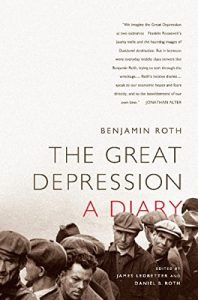
    The Great Depression: A Diary book coverBuy the Book: Print | eBook

    Benjamin Roth was a lawyer in Ohio who realized early in the Great Depression that he was living through a financially significant time and wanted to learn from it. His diary recorded the effect the Great Depression, the economy, and financial markets had on people.

    The Notes

    Continue Reading…


Previous Page
1 … 56 57 58 59 60 … 233
Next Page

Join the library.

Access over 1,100 research papers, writings, transcripts, and more from the brightest minds in finance.

Learn More

Learning

  • Investor Library
  • Book Notes
  • Investor Quotes

Return Quilts

  • Asset Class Returns
  • S&P Sector Returns
  • International Stock Market Returns
  • Emerging Markets Returns
  • Historical Returns Data

Connect

  • Bluesky
  • Twitter
  • Facebook
  • RSS Feed
  • Home
  • About
  • Contact

© Novel Investor · All Rights Reserved · Terms of Use · Privacy Policy · Disclaimer