
Novel Investor
  • Home
  • About
  • Invest with Me
  • Resources
  • Asset Class, Sector, & Markets Quilts Updated for Q3 2024

    October 2, 2024

    ·

    Jon

    The asset class, sector, emerging, and international market quilts are up-to-date through the third quarter of 2024. A few unexpected things stand out.

    Interactive versions of each table can find at these links:

    • Asset Class Returns
    • Sector Returns
    • International Market Returns
    • Emerging Market Returns

    You can also download copies here or grab the images below.

    The biggest benefit to visualizing returns in a table format is seeing the power of diversification over time and how difficult it is to predict the best-performing asset classes, sectors, and markets in any given year. So far this year’s been a great example.

    Did anyone predict utilities would be the best-performing sector year to date? Yet it tops the list, outpacing big tech through September. Continue Reading…

  • Weekend Reads – 9/27/24

    September 27, 2024

    ·

    Jon

    Quote for the Week

    A phenomenon Ben Graham talked about over and over again. He said, “It’s not the bad ideas that do you in, it’s the good ideas.”… He meant that if a thing is a bad idea, it’s hard to overdo it.… You’ll recognize it as a bad idea, so it’s not going to cause much investment trouble. But where there is a good idea with a core of essential and important truth, you can’t ignore it. After all, it’s a good idea with important truth in it causing big effects. And then it’s easy to overdo it. So the good ideas are a wonderful way to suffer terribly if you overdo them. — Charlie Munger (source)

    Continue Reading…


  • Quarterly Reading – Fall 2024

    September 25, 2024

    ·

    Jon

    Here’s what I’ve been reading for the past three months:

    • The Autobiography of Andrew Carnegie — Carnegie’s approach to business was different. He thought big at a time when most industrial companies were small and privately owned. His autobiography covers his rise from Scottish immigrant to bobbin boy to telegraph messenger to building a steel empire to becoming the richest person in the U.S and giving it all away. While Carnegie paints himself in an obvious positive light at times, the book offers insights into the early adoption of modern business practices. (Notes)
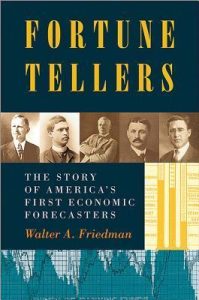
    • Fortune Tellers: The Story of America’s First Economic Forecasters — The early 1900s saw a rise in market and economic forecasters. The book presents biographies of the five biggest forecasters of the 1920s. Roger Babson and Irving Fisher were the biggest. John Moody, Herbert Hoover, and others played a prominent role, as well, in shaping the forecasting industry, economics, and social discourse during a massive market boom that ended in the 1929 crash. None turned out to be very good at it. By the time the Great Depression was well underway, all five had quit the forecasting business. (Notes)
    • The Forgotten Depression 1921: The Crash that Cured Itself — A deep depression hit the U.S. after WWI and set the stage for the Roaring 20s. The book covers that period and the government’s response (or lack of response in this case) to correct it. I set this book down a few chapters in because it covers a similar period to that of Fortune Tellers — too much history — but will revisit it after the next book is finished.
    • My Life and Work — Henry Ford shares his approach to business — production, eliminating waste, wages, etc. — in his 1922 autobiography. Notes to come once the book is finished.

    Continue Reading…


  • Weekend Reads – 9/20/24

    September 20, 2024

    ·

    Jon

    Quote for the Week

    The most famous comment about the long run was Keynes’s quip that in the long run we are all dead. Keynes was really arguing that, in a system that is naturally volatile and characterized by uncertainty, most of us simply do not have the time on earth required for economic and financial variables to regress to their long-run means. We are inevitably trapped in the short run.

    The difficulty arises because the long run is not a homogeneous state of the world, a smooth and straight line into the future. The long run is the average of a set of heterogeneous states of the world. We have no reason to expect that what lies ahead in our lifetimes is going to match precisely the average experience that the so-called long run represents…

    While we can learn from the long run about how bonds and stocks respond to changing environments and to each other, the long run can tell us perilously little about what kinds of environments lie ahead. On that point, I maintain, we have to accept uncertainty rather than fighting it: we must rely more on judgment than on economic models. I agree with Nobel Laureate Kenneth Arrow that “Our knowledge of the way things work, in society or in nature, comes trailing clouds of vagueness. Vast ills have followed a belief in certainty.” — Peter Bernstein (source)

    Continue Reading…


  • Fortune Tellers: The Story of America’s First Economic Forecasters by Walter Friedman

    September 18, 2024

    ·

    Fortune Tellers book coverBuy the Book: Print | eBook

    Fortune Tellers presents five biographies of prominent forecasters of the 1920s. Each one rode the wave of U.S. economic prosperity and market speculation only to fall from grace as their inability to see the future was realized.

    The Notes

    Continue Reading…


  • Weekend Reads – 9/13/24

    September 13, 2024

    ·

    Jon

    Quote for the Week

    Something which at first appears random or unpredictable may actually be predictable. Claude Shannon and I built a machine to beat roulette. Roulette normally appears to be a random process. But, sometimes, way back, players exploited defects in roulette wheels. Maybe one of the frets or dividers between the pockets is a little loose, so some pockets would be preferred over other pockets, so the numbers would come up with frequencies that deviated from random to some extent. The machine we built was even more advanced, it predicted position and velocity of ball and rotor, and from that we were able to forecast what region of the wheel the ball would fall into. We got a big edge. The machine is now in the MIT museum. So this is an example where, if you have more information about something that appears to be random, it could turn into an edge.

    That’s also how markets are. The problem is that, even though markets aren’t strongly efficient in the sense of EMH, it’s still difficult to find edges. By “edge,” I mean excess return after adjusting for risk, net of costs. Also, when an edge is discovered, the money that’s poured into it makes the edge go away, because it moves prices toward correct pricing. So, I don’t think EMH is quite the right mental framework for thinking about markets, but it’s a good start for almost everybody. — Ed Thorp

    Continue Reading…


Previous Page
1 … 22 23 24 25 26 … 233
Next Page

Join the library.

Access over 1,100 research papers, writings, transcripts, and more from the brightest minds in finance.

Learn More

Learning

  • Investor Library
  • Book Notes
  • Investor Quotes

Return Quilts

  • Asset Class Returns
  • S&P Sector Returns
  • International Stock Market Returns
  • Emerging Markets Returns
  • Historical Returns Data

Connect

  • Bluesky
  • Twitter
  • Facebook
  • RSS Feed
  • Home
  • About
  • Contact

© Novel Investor · All Rights Reserved · Terms of Use · Privacy Policy · Disclaimer