 Buy the Book:
 Fred C. Kelly figured out that behavior plays a bigger part in investor success than most thought. That he did so in 1930, says a lot about how little human nature changes. Kelly proposed that by acting counter — contrarian — to the general tendencies of most market participants, one avoids most typical mistakes, and succeeds at investing. Studying average investor mistakes presents a guide to future dangers.

-
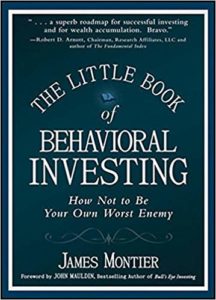
The Little Book of Behavioral Investing by James Montier
·
James Montier writes about the many ways investors are their own worst enemies. The book concentrates on the many repeated behavioral mistakes investors inflict on themselves that negatively impact returns in the process.
The Notes
-
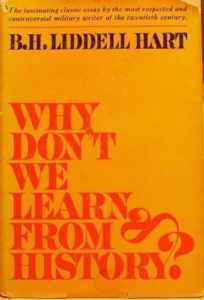
Why Don’t We Learn From History? by B.H. Liddell Hart
·
B. H. Liddell Hart wrote the book as a summary of the history of warfare. Rather than writing the lessons we learn from history, he inverts the message to the many lessons we fail to learn from history.
The Notes
-
Quarterly Reading – Winter ’19
·
It’s time for another quarterly reading update (these updates are mostly for my own accountability, but if you find something that interests you, great). Several projects ate into reading time, which meant fewer books over the past three months. The plan is to get back into it in 2019.
Here’s what I’ve been reading over the past quarter: Continue Reading…
-
Stan Druckenmiller’s Worst Mistake Ever
·
One of the best ways to learn about investing is through second-hand experience by learning what not to do from the mistakes of others. It’s the most cost-effective, resource-abundant way to learn since history is filled with other people’s mistakes. The other option is first-hand. It’s expensive but stickier — less easily forgotten.
There’s one downside though. Knowing won’t make you immune from repeating it. All the information in the world is useless when emotions drive decisions.
Take Stan Druckenmiller.
He’s arguably one of the best investors ever. He averaged 30% per year over a 30-year career, with no losing year. And he once turned a $1 million donation to a school, invested over five years, into a $35.6 million windfall.
A return like that is not easy. It requires taking extremely concentrated bets with a lot of leverage and most importantly an openmindedness to change your mind when you’re wrong. Continue Reading…
-
2018: A Year in Returns
·
Shelby Davis once said, “Bear markets make people a lot of money, they just don’t know it at the time.” Based on some fancy rounding, the S&P 500 hit the unwritten 20% decline rule (19.77% for sticklers) for a bear market based on 2018’s September high to the Christmas Eve low (thanks Santa).
Yet, despite that, the S&P 500 finished the year with a -4.4% total return. Global markets looked less pretty. And cash was king again.
Unless, of course, you’re a net buyer of stocks. To paraphrase Davis — bear markets are a great buying opportunity, they just don’t feel like it at the time. That feeling is the hard part for new investors and the rest of us who forgot how the last bear market felt.
Now, not all bear markets are like the last bear market. The lesson from that one was that it was excruciatingly hard for many investors to buy but also the greatest buying opportunity for anyone with time on their side. Continue Reading…
 Buy the Book:
  Buy the Book: