
August 25, 1987, marked the start of the one of the worst slides in market history. In less than two months, the Dow dropped 983 points — 508 on those on the last day.
Black Monday, as it came to be known, was believed an impossibility. Nothing would ever come close to the one-day losses seen in 1929.
The Friday before finished the week with three straight days of market losses. It also marked the worst one-day point decline in Dow history. The 108.36-point loss equated to a 4.8% decline going into the weekend.
When the NYSE opened Monday, October 19th, international markets were already falling. The Dow was off 67 points at the opening bell.
By 10:30am, 140 million shares had traded. The Dow had fallen another 34 points.
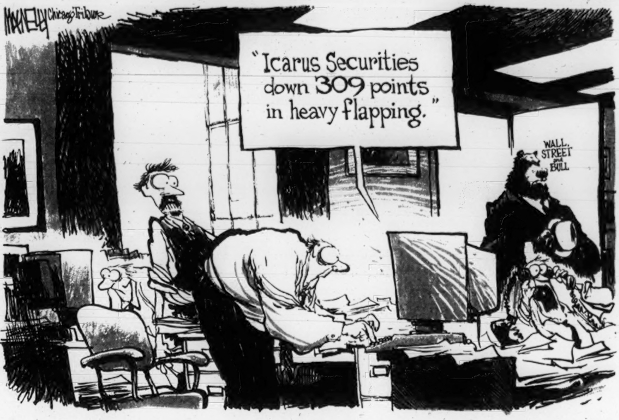
A brief 95-point rally raised hopes around 11:30am. The rally fizzled and the Dow turned lower again by noon to 2103. By 2:15pm, it was in freefall — down 300 points with no end in sight.
At the closing bell, 604 million shares traded, almost twice that of the Friday before, and four times the normal average volume. A new record. The Dow closed 508 points lower. Also, a new record. The 22.6% decline was (still is) the worst one-day loss in history.
The headlines reported it the next day:
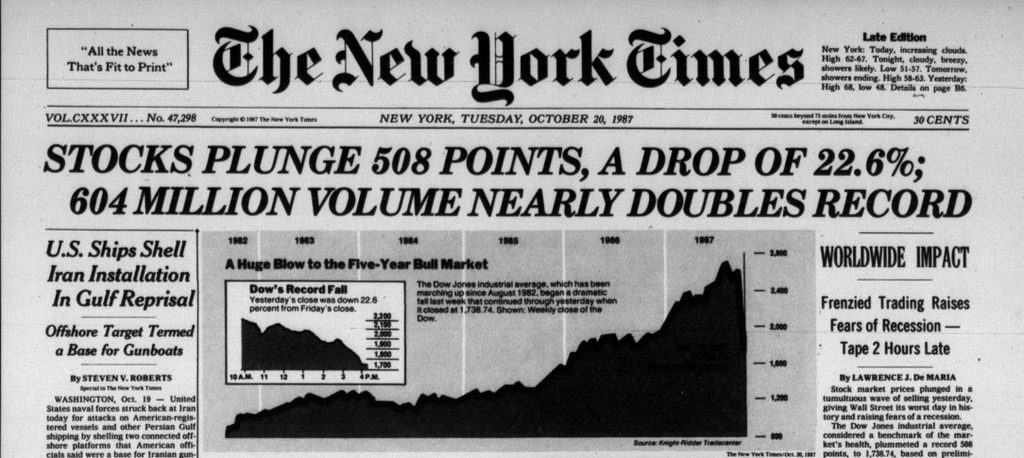
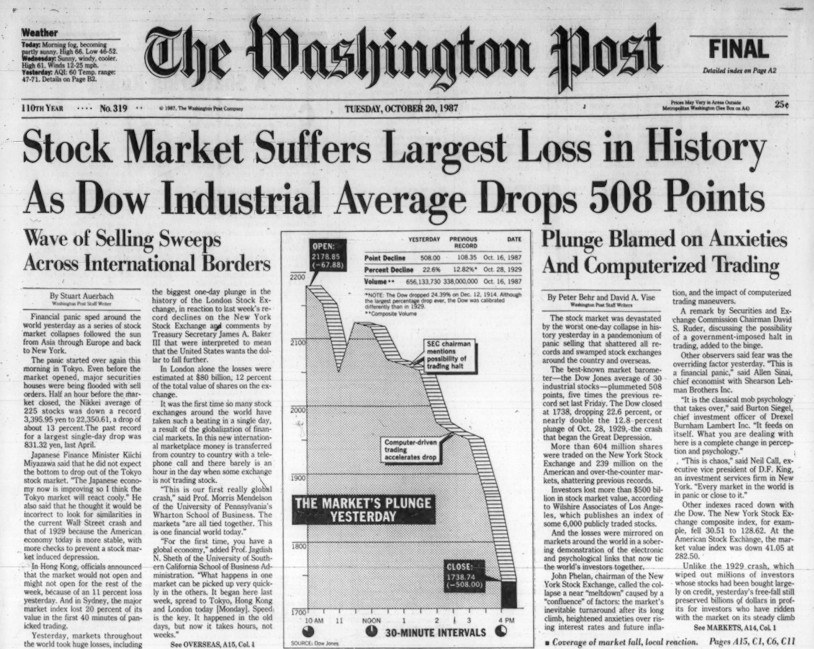
Comparisons to 1929 were immediate. So too were fears of a depression. The blame game was equally quick. Portfolio insurance, computer trading, rising interest rates, falling dollar, widening federal deficit, and overvaluation topped the list.
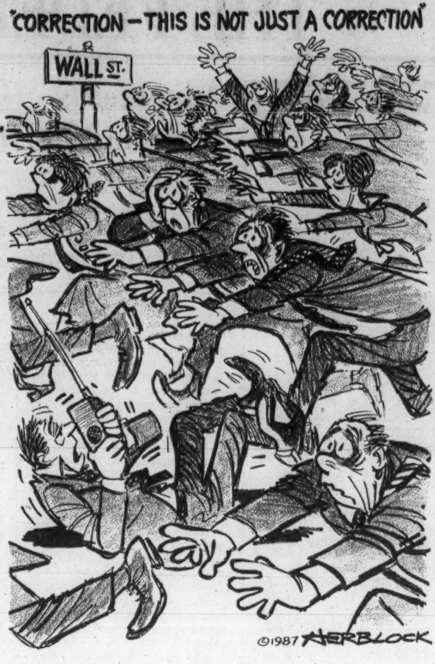
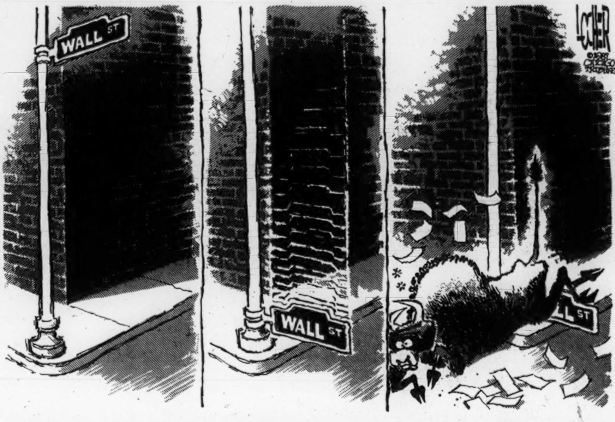
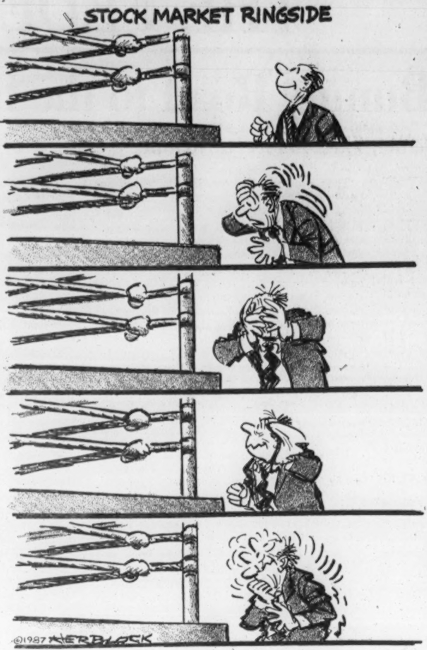
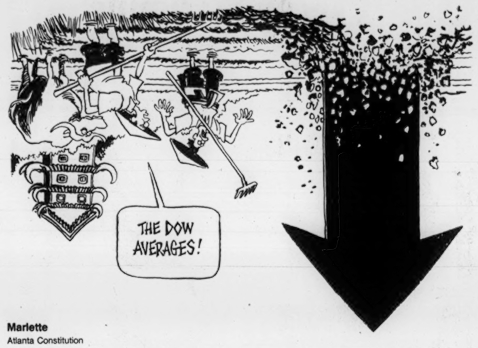
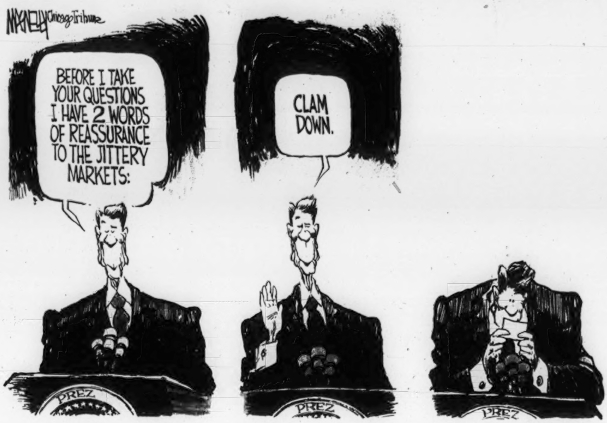
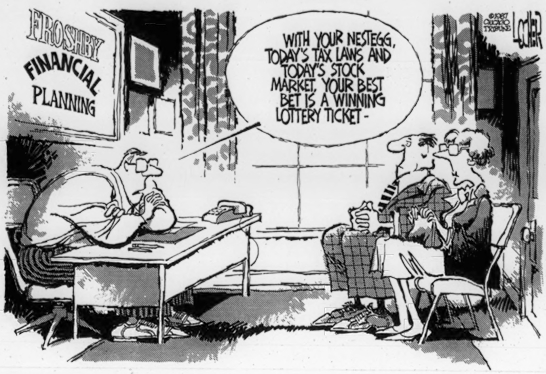
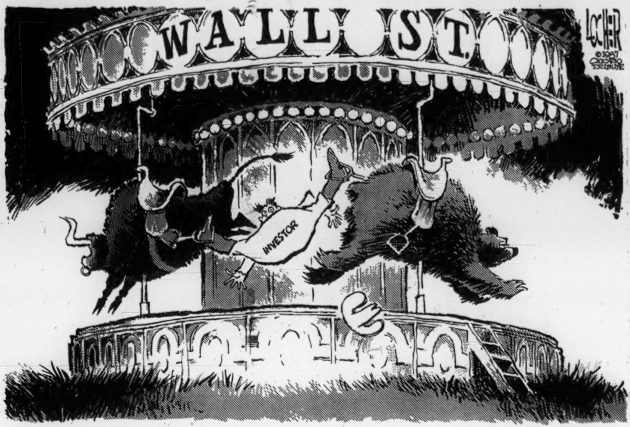
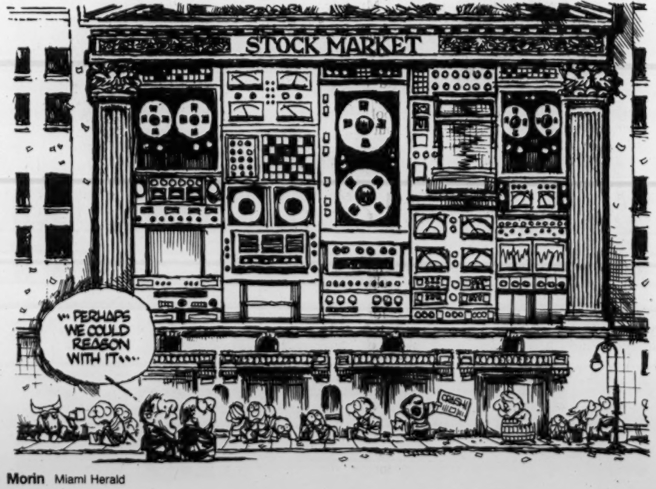
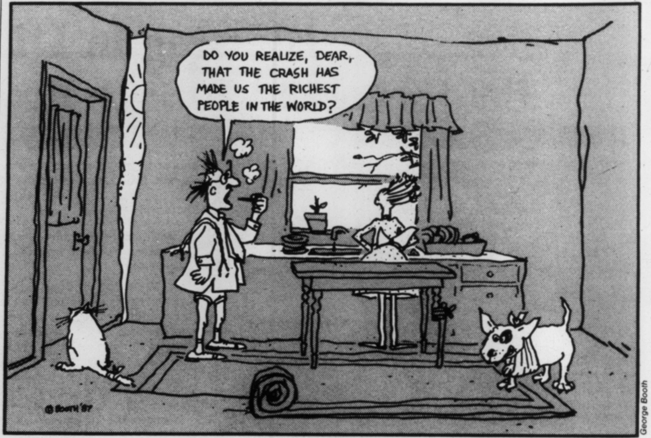
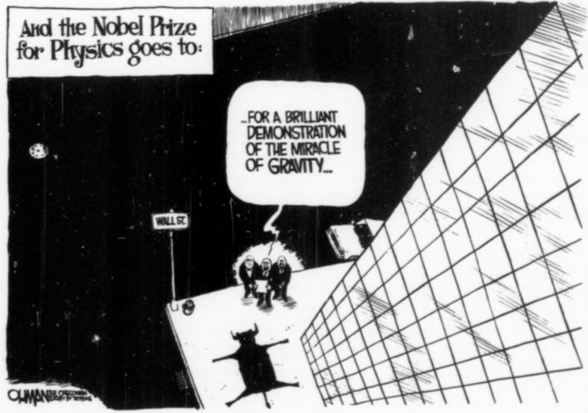
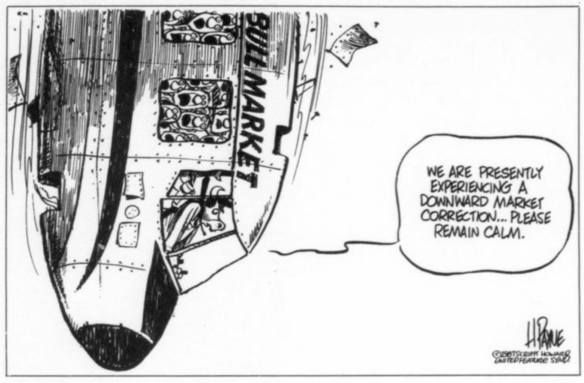
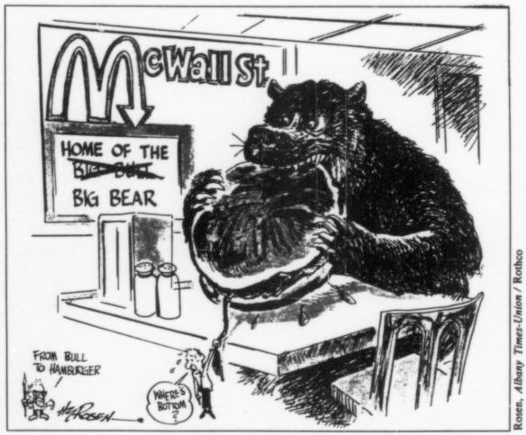
Surprising many, the market stabilized within the week. For those who didn’t panic sell that day, things turned out alright. The Dow finished the year barely positive. And editorial cartoonist captured the hopes and fears of the year.
1987 began with no worries.
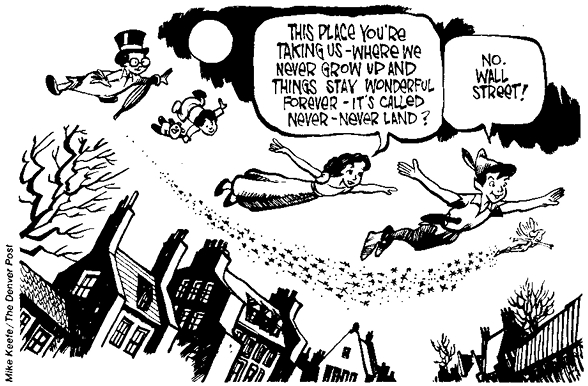
The mood didn’t last.



Related Reading: