
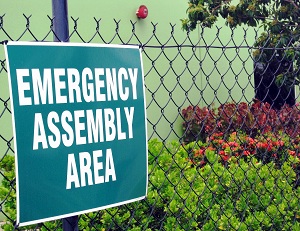
 Have you ever had the small misfortune to wake up, take a shower, but have no hot water, or where you’re driving to work, only to get a flat. You hope these problems are just a quick fix. But when they’re not, you know it’s going to cost more than you want to spend. The good news is you have an emergency fund set aside just for these situations, right.
When these unplanned problems show up, it’s easy to turn to a credit card and slowly pay it off each month until the next big surprise happens. Of course paying off the extra debt won’t be fun and if it piles up too high, credit cards no longer become an option when the water heater craps out or worse, there’s a job loss.
How Much Should Be Save?
Financial experts give a wide range for how much should be saved for an emergency fund. A starting point is 4 to 6 months of basic expenses. With the recent recession, some experts go as far out as 9 to 12 months. Which may be a bit excessive. Continue Reading…
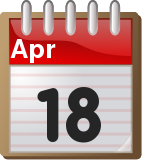 The tax filing deadline is fast approaching. If you haven’t filed your taxes yet, you’re not alone. According to the IRS, about 25% of all taxpayers wait till the last two weeks to file their taxes. For those sitting in that 25%, you have until the deadline of Monday, April 18 to file your taxes this year.
 The 2010 IRA contribution deadline is fast approaching. With only a few weeks left, you still have time to make your 2010 contributions. If you have done any retirement planning in the past, a traditional or Roth IRA plays a role in achieving your retirement goals.
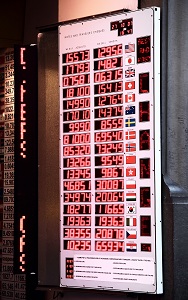 There are two views of putting money to work in the market. The first is quietly sitting down, studying balance sheets and deciding on an investment that you’ll probably stick with for a few years. The other is the fast pace, high stress picture you get from movies like Wall Street. With row upon row of traders, two or three computer screens each, yelling at every single up and down tick of a stock. Exactly how realistic that is, I don’t know, but it makes for good movie drama.
 Volatile markets are great for the day traders. They offer great opportunities to make money, but as a trader you have to be watching the market movements on a minute by minute basis. Not everyone has the time or the risk tolerance to invest this way. Sometimes it’s better to play things safe during highly uncertain times.
 Some people call it research, others analysis, maybe its due diligence, and even worse, homework. It’s certainly not fun, can be overly time consuming, but with investing it’s an absolute must or it will cost you.