Novel Investor
  • Home
  • About
  • Invest with Me
  • Resources
  • The Last Edge: Avoiding Negative Action

    June 21, 2019

    ·

    Jon

    We can point out the errors to be avoided much more successfully than we can lay out a course of positive action.

    G.C. Selden wrote that line in 1912. It fits Munger’s idea of inversion: figure out the best ways to lose money, then avoid doing those things. It’s a common-sense way to improve returns.

    I came across this idea twice this week (it happens every week, really) from century-old sources. Selden covered the usual suspects — over-optimism, enthusiasm, stubbornness, fear, anger, greed — before summarizing his book on investor psychology. Continue Reading…


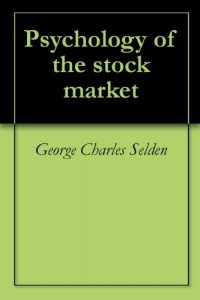
  • Psychology of the Stock Market by G.C. Selden

    June 20, 2019

    ·

    Psychology of the Stock MarketBuy the Book: Print | eBook

    G.C. Selden’s timeless book describes the influence human nature has on markets and what investors/traders must do to overcome potential behavioral errors to be successful. It’s as relevant today as it was when it was published in 1912.

    The Notes

    Continue Reading…


  • Different Forms of “This Time is Different”

    June 14, 2019

    ·

    Jon

    Howard Marks releases a new memo based on often used phrase “this time is different.” He highlights nine ideas, each a different form of those four words, that come up often today. His response to two ideas is worth highlighting.

    The first is on the idea that we don’t have to have a recession.

    When I hear people talk about the possibilities that the Fed will prevent a recession, I wonder whether it’s even desirable for it to have that goal. Per the above, are recessions really avoidable or merely postponable? And if the latter, is it better for them to occur naturally or be postponed unnaturally? Might efforts to postpone them create undue faith in the power and intentions of the Fed, and thus a return of moral hazard? And if the Fed wards off a series of little recessions, mightn’t that just mean that, when the ability to keep doing so reaches its limit, the one that finally arrives will be a douzy?

    The push to minimize volatility in cycles — markets, business, economy — was the main theme that came out of the financial crisis. It’s not a new theme either. Except, what people really want, is what everyone wants — the upside without the downside that comes with it. It never works out that way, but it doesn’t stop people from trying again and again… Continue Reading…


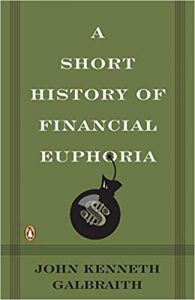
  • A Short History of Financial Euphoria by John Kenneth Galbraith

    June 11, 2019

    ·

    A Short History of Financial EuphoriaBuy the Book: Print | eBook

    John Kenneth Galbraith journeys through the recurring theme of speculative mania and financial ruin inherent in markets, His big picture view describes the common features associated with most euphoric episodes.

    The Notes

    Continue Reading…


  • Longer Term Return Data Sources

    June 7, 2019

    ·

    Jon

    It’s never been easier for the average investor to find long term return data. The asset class tables I started several years ago, never would have been possible without it.

    The benefit is the ability to turn a pile of numbers into a visually appealing tool — something people can learn from and, hopefully, make more informed investment decisions.

    All the index data I use in the tables can be found online in some form. To get the returns still requires a little math. Since I’m doing the work for the tables anyways, I thought I’d publish it in case others might it useful.

    Anyone who’s interested can find it on the new Historical Returns page. You can click the download buttons to grab a copy in CSV or Excel formats. Continue Reading…


  • Ten Hell’s of the Speculator

    June 5, 2019

    ·

    Jon

    Severn years before Edwin Lefevre began a series of articles that would become Reminiscences of a Stock Operator, he warned of the perils in speculation. He likened it to gambling on an unbeatable game.

    His reason was no different than what’s been repeated millions of times since. Speculators are more likely to beat themselves before they ever beat the market.

    What makes the game of stock speculation the most dangerous of all is the variety of pleasing disguises it is able to assume. Being born of greed, it feeds on greed, and thereby waxes greater. If that were all it did, of if it did this openly, it would not be so dangerous; but besides the additional lure of adventure there is the irresistible appeal to vanity, the challenge to pit your wits against other wits, and even against Nature and the vagaries of the weather and the weaknesses of men. It most often masquerades as a legitimate business operation, subject to and governed by the ordinary rules of ordinary business.

    Greed, vanity, and ignorance make for a bad combination for speculators. It leads to all the familiar mistakes — chasing “easy money,” over trading, unable to quit while ahead — that inevitably lead to their downfall.

    Lefevre warned readers about all of this in 1915, then relayed the 10 Hells: Continue Reading…


Previous Page
1 … 96 97 98 99 100 … 233
Next Page

Join the library.

Access over 1,100 research papers, writings, transcripts, and more from the brightest minds in finance.

Learn More

Learning

  • Investor Library
  • Book Notes
  • Investor Quotes

Return Quilts

  • Asset Class Returns
  • S&P Sector Returns
  • International Stock Market Returns
  • Emerging Markets Returns
  • Historical Returns Data

Connect

  • Bluesky
  • Twitter
  • Facebook
  • RSS Feed
  • Home
  • About
  • Contact

© Novel Investor · All Rights Reserved · Terms of Use · Privacy Policy · Disclaimer