Novel Investor
  • Home
  • About
  • Invest with Me
  • Resources
  • Weekend Reads – 7/11/25

    July 11, 2025

    ·

    Jon

    Quote for the Week

    When I shifted my focus from beating gambling games to analyzing the stock market, I naively thought that I was leaving a world where cheating at cards was then problematic and entering an arena where regulation and the rule of law gave investors a fair playing field. Instead, I learned that bigger stakes attracted bigger thieves. Madoff’s Ponzi scheme was only the largest of the many that were exposed in 2008 and 2009, with others ranging from eight billion (a “bank”) through hundreds of millions (including several hedge funds), to multimillion dollar real estate, mortgage and annuity scams. I speculate that the size of swindles likely follows a simple mathematical “power law,” like the distribution of high incomes and top wealth discussed in previous columns, with their number increasing as their economic size decreases…

    The flood of almost daily frauds, swindles and hoaxes reported in the financial press has continued during my entire investment career and I expect that when you read this months, years or decades later, you’ll find your own profusion of examples. Hoaxes, frauds, manias and other large scale financial irrationalities have been with us from the beginnings of the markets in the seventeenth century, long before the Internet. — Ed Thorp (source)

    Continue Reading…

  • 2025: Q2 Returns

    July 8, 2025

    ·

    Jon

    A lot can happen in a few short months in markets. The U.S. market went from a crash to a recovery to new highs in five months.

    It began with the announcement of tariff rates not seen since the 1930s. Then they were delayed. A similar pattern has followed since. Threaten tariffs, announce tariffs, delay announced tariffs, delay some more, and repeat.

    The market, at this point, seems to be pricing in the existing tariffs with further delays on anything higher. The risk is that the pattern changes.

    The other notable issue this year is the declining dollar. Currency risk can enhance or negate returns depending on where and how your money is invested.

    For example, the dollar relative to the euro is down about 11% through the first half of the year. The falling dollar explains a portion of the performance of foreign markets this year. Countries in the MSCI EAFE and EM index, that use the euro, are all up more than 11% year to date.

    Another way to look at it is the chart below. It shows the dollar-hedged (HEFA) versus unhedged (EFA) MSCI EAFE ETFs. Most investors own unhedged funds, for good reason. It offers currency diversification and avoids needing to predict big currency exchange shifts because it’s difficult to do.

    Continue Reading…

  • Weekend Reads – 6/27/25

    June 27, 2025

    ·

    Jon

    Quote for the Week

    The common thread that runs through all equity bull markets is confident expectations of higher earnings ahead. The common thread that ties the onset of all bear markets together is the loss of those confident expectations of higher earnings ahead. History shows that bull markets can go well beyond rational valuation levels as long as the outlook for future earnings is positive.

    Bull markets require economic slack so that companies can grow, and positive trends in real business activity to take advantage of that slack. Remember, stock prices show no consistent relationship to interest rates, exchange rates, inflation rates, budget policy, monetary policy or any of the other things we professionals love to discuss. These forces matter only when they matter to the future movement of corporate earnings. — Peter Bernstein (source)

    Continue Reading…

  • Quarterly Reading – Summer 2025

    June 25, 2025

    ·

    Jon

    Here’s what I’ve been reading for the past three months:

    • The Lords of Creation – Adding this again because the notes are finally up. It covers the period from the late 1800s to the Great Depression — the rise of big business, monopolistic tendencies, financial shenanigans, shifting social and political views, impact of WWI, invention and innovation, wealth disparity, and bubbles and busts. Lots of similarities to today. If you’re into financial history, this is a good one. (Notes)
    • Innumeracy – The book explains why math is important. A lack of understanding probabilities and randomness can bias our perspective and affect decisions. (Notes)
    • The Laws of Simplicity – John Maeda writes about the intersection of technology, business, and design with ten principles on creating simpler systems. (Notes)
    • The New York Stock Exchange in the Crisis of 1914 (Free Copy) – Henry Noble, then president of the NYSE, offers a first-hand account of the decision to shut down the exchange at the start of WWI, the problems that arose, how they dealt with it, and the decision to reopen four and half months later. It’s a short read and an interesting bit of market history.
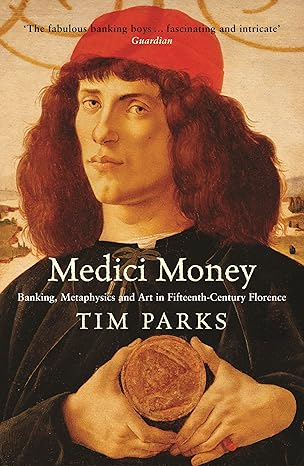
    • Medici Money – New book started this week. It looks at the rise and fall of the Medici bank.
    Continue Reading…

  • Weekend Reads – 6/20/25

    June 20, 2025

    ·

    Jon

    Quote for the Week

    Hard experience has taught me that chasing noise leads me to miss the main trend too often. At the same time, having lived through the bond yield/stock yield shift of the late 1950s and the breakthrough of bond yields into the stratosphere beyond 6 percent in the late 1960s — just to mention two such shattering events out of many — I look with suspicion at all main trends and all those means to which variables are supposed to regress. To me, the primary task in investing is to test and then retest some more the parameters and paradigms that appear to govern daily events. Betting against them is dangerous when they look solid, but accepting them without question is the most dangerous step of all. — Peter Bernstein (source)

    Continue Reading…

  • The Day the Market Stopped

    June 18, 2025

    ·

    Jon

    Nothing was the same after June 28, 1914. The assassination of Archduke Franz Ferdinand triggered a chain of events that led to WWI and closed the NYSE for months.

    One month to the day of the assassination, Austria-Hungary declared war. Three days later, Henry Noble, president of the NYSE, closed the exchange. Other regional U.S. exchanges in Chicago, Baltimore, San Francisco, Philadelphia, and other cities followed suit. Most major exchanges around the world closed too.

    Noble knew that wars demanded funds. Foreign investors could make a run on the exchange, selling securities to raise cash. The cash could then be converted into gold and shipped back to Europe.

    That put the U.S., being on the gold standard, in a tricky spot. Depleting the U.S. gold reserves would put faith in the dollar and adherence to the gold standard at risk.

    The belief is that William McAdoo, Treasury Secretary, pushed Noble to shutter the exchange to buy time. The chain of events continued to trigger the next day:

    Continue Reading…

Previous Page
1 … 10 11 12 13 14 … 232
Next Page

Join the library.

Access over 1,100 research papers, writings, transcripts, and more from the brightest minds in finance.

Learn More

Learning

  • Investor Library
  • Book Notes
  • Investor Quotes

Return Quilts

  • Asset Class Returns
  • S&P Sector Returns
  • International Stock Market Returns
  • Emerging Markets Returns
  • Historical Returns Data

Connect

  • Bluesky
  • Twitter
  • Facebook
  • RSS Feed
  • Home
  • About
  • Contact

© Novel Investor · All Rights Reserved · Terms of Use · Privacy Policy · Disclaimer