
Novel Investor
  • Home
  • About
  • Invest with Me
  • Resources
  • Same As It Ever Was

    May 21, 2025

    ·

    Jon

    Part of investing is discerning between what will change and what will stay the same when digging for opportunities. History hints at the answers.

    Study a little history and you’ll recognize obvious changes over the past century due to innovation, new business creation, and more that created massive opportunities for investors that recognized it and held on.

    However, one thing stands out that has changed the least — human nature. The behavior of other investors creates massive opportunities, but it requires learning a different lesson then everyone else.

    Because it never fails that investors learn the wrong lessons in bull markets. The reason behind it is simple.

    A new batch of investors join the queue each year. Add to that the existing portion of investors yet to experience a full market cycle. Toss in a few more who have the experience of only mild market swings compared to history and you get some interesting lessons learned.

    Our pattern seeking ability falls short of scientific when it comes to making money in markets. The downside is we see patterns in random or noisy data leading to faulty assumptions and ill-conceived decisions.

    Continue Reading…
  • Weekend Reads – 5/16/25

    May 16, 2025

    ·

    Jon

    Quote for the Week

    One of the most remarkable things about the investing world is how (correctly) venerated Warren Buffett is and how completely people ignore his investing advice. Since Mr. Buffett has made more money than anyone in the history of the planet solely through investing, one would think that when he says quite clearly what to invest in, people would pay attention. I guess they do pay attention, they just do the opposite. In 1974, near the bottom of the market, he said stocks were so cheap he felt like an over-sexed guy in a harem. In 1999, near the top, he opined that stocks would see returns way below those experienced in the bull market up to that time. From the time of his comments in November 1999 to the end of October 2008, stocks fell over 2% per year. In October 2008, again near the bottom, Buffett published an op-ed in the New York Times entitled, “Buy American. I Am.” telling people to buy American stocks. They promptly accelerated their selling. On October 5th of this year, he said the following: “It is quite clear stocks are cheaper than bonds. I can’t imagine anybody having bonds in their portfolio when they can own equities.” The result: people pour their money into bond funds in record amounts, and sell their holdings in funds that invest in U.S. stocks. Why investors persist in doing the opposite of what the greatest investor of all time does, is a greater mystery than the problem of consciousness, or the origin of life, or free will and determinism. Those at least are hard problems. — Bill Miller (source)

    Continue Reading…

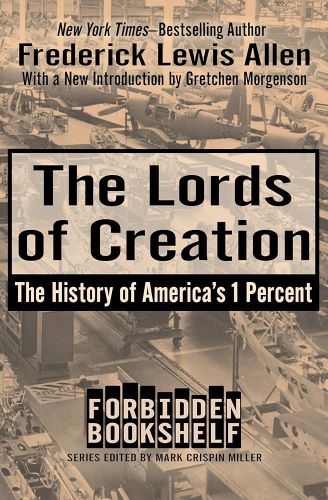
  • The Lords of Creation by Frederick Lewis Allen

    May 14, 2025

    ·

    Buy the Book: Print | eBook

    Frederick Lewis Allen chronicles the rise of big business and financial markets in the United States from the 1890s to the 1930s and how it changed the country.

    The Notes

    Continue Reading…

  • Weekend Reads – 5/9/25

    May 9, 2025

    ·

    Jon

    Quote for the Week

    The money doesn’t go to the people with the highest I.Q. There would be a very poor correlation between I.Q. and investing and results. And you say to yourself why does somebody with a 500-horsepower motor only get 100-horsepower out of it? And I would say that if you look at the intellect as being the horsepower that’s available, but you look at the output as reflecting the efficiency of that motor, it is rationality that causes the capacity to be translated in output.

    Now what interferes with rationality? It’s ego. It’s greed. It’s envy. It’s fear. It’s mindless imitation of other people. I mean, there are a variety of factors that cause that horsepower of the mind to get diminished dramatically before the output turns out. And I would say if Charlie and I have any advantage it’s not because we’re so smart, it is because we’re rational and we very seldom let extraneous factors interfere with our thoughts. We don’t let other people’s opinion interfere with it. We don’t get– we try to get fearful when others are greedy. We try to get greedy when others are fearful. We try to avoid any kind of imitation of other people’s behavior. And those are the factors that cause smart people to get bad results. — Warren Buffett (source)

    Continue Reading…

  • Lessons from the 2025 Berkshire Meeting

    May 7, 2025

    ·

    Jon

    The Berkshire annual meeting this past weekend came with one surprise announcement and a host of lessons. Buffett’s retirement as CEO at year’s end came as a surprise to many. He’ll remain as Chairman while Greg Abel takes the reins of Berkshire at the start of next year. So, it’s not over yet. Hopefully, there’s a few more years’ worth of lessons to come. Let’s dive in.

    Downside of Success

    Size is an enemy of performance at Berkshire. I don’t know any good way to solve that problem.

    The downside of successful investing, at Buffett’s level, is that decades of outperformance grow your money so large that the odds of continued outperformance becomes less likely. Simply, the pool of available investments decreases as the size of your pot grows making it harder to outperform.

    It’s a good problem to have. Invest long enough, and grow your money large enough, market returns become an eventuality.

    Continue Reading…

  • Weekend Reads – 5/2/25

    May 2, 2025

    ·

    Jon

    Quote for the Week

     Yes, investors are right to be serious students of the markets, particularly the extremes that entice and ensnare, but markets are only part of the recommended curriculum. Know thyself is even more important, and all investors will want to recognize the central lessons of behavioral finance:

    • As investors, we overreact to good news and to bad news.
    • We believe in hot hands and winning streaks, and that recent events matter, even in flipping coins.
    • We are impressed by short-term success, as in mutual fund performance.
    • We are confirmation-biased, looking for and overweighting the significance of data that support our initial impressions.
    • We allow ourselves to use an initial idea or fact as a reference point for future decisions even when we know it is just a number.
    • We distort our perceptions of our decisions, almost always in our favor, so that we believe we are better than we really are at making decisions. And we don’t learn; we stay overconfident.
    • We confuse familiarity with knowledge and understanding…

    Investors — like dieters and teenage drivers — will be wise not to expect too much of themselves, particularly when superior personal behavior would be vital to achieving superior results. — Charley Ellis (source)

    Continue Reading…

Previous Page
1 … 12 13 14 15 16 … 232
Next Page

Join the library.

Access over 1,100 research papers, writings, transcripts, and more from the brightest minds in finance.

Learn More

Learning

  • Investor Library
  • Book Notes
  • Investor Quotes

Return Quilts

  • Asset Class Returns
  • S&P Sector Returns
  • International Stock Market Returns
  • Emerging Markets Returns
  • Historical Returns Data

Connect

  • Bluesky
  • Twitter
  • Facebook
  • RSS Feed
  • Home
  • About
  • Contact

© Novel Investor · All Rights Reserved · Terms of Use · Privacy Policy · Disclaimer