Novel Investor
  • Home
  • About
  • Invest with Me
  • Resources
  • What Century-Old Companies Can Teach Investors

    June 17, 2022

    ·

    Jon

    The average life of a company is shrinking. Today, the average age of an S&P 500 company is 15 years. That compares to 67 years in the 1920s. Yet, outliers exist that defy that trend.

    One such group of outliers is known as the Henokiens. To be a Henokien, a company must be founded over 200 years ago and still controlled by the founding family. There are 48 member companies in the group.

    What does it take for a company to survive over 200 years? Lessons from Century Club Companies answers that question. The author, Vicki TenHaken, studied companies over 100 years old to see what characteristics set them apart from all the rest.

    Interestingly, her results carry some crossover lessons to investing. It starts with having a mission statement.

    Live the Mission Statement

    Long-term success is the byproduct of a company successfully working its mission. Every century-old company has a written mission statement that led the company to where it is today. Continue Reading…

  • High Returns from Low Risk by Pim Van Vliet

    June 15, 2022

    ·

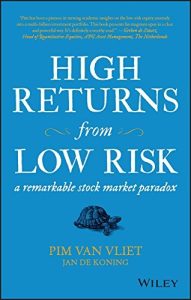
    High Returns from Low Risk book coverBuy the Book: Print | eBook

    The book looks at the persistence of the low-volatility anomaly throughout market history. The author explains why the anomaly exists and how to construct a portfolio of low-volatility stocks to take advantage of it.

    The Notes

    Continue Reading…


  • There’s Always Something to Do by Christopher Risso-Gill

    June 8, 2022

    ·

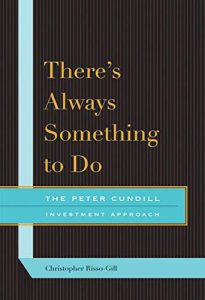
    There's Always Something to Do book coverBuy the Book: Print | eBook

    There’s Always Something to Do tells the story of Peter Cundill’s life and career. A chance reading of SuperMoney led him to Ben Graham’s deep value approach, which he adapted for global stock markets.

    The Notes

    Continue Reading…


  • Daniel Kahneman: Loss Tolerance

    June 3, 2022

    ·

    Jon

    What’s your risk tolerance? How do you indentify it? Both are important questions that investors spend little time thinking about at first. They’re also abstract questions thanks to the convoluted definitions of risk.

    Daniel Kahneman suggests a better way to frame the question. Rather than risk tolerance, you should ask: what’s your loss tolerance? It makes you think about protecting your money. How much loss can you endure before you reach the point where emotions push you to change your mind and change your portfolio?

    That breaking point is important because it’s usually where mistakes are made like buying high and selling low. Changing your portfolio every time emotions surface leads to worse results.

    By reframing the question, Kahneman forces you to think in terms of actual dollars. Lost dollars can be quickly equated to missed goals and dreams — less money for college, a canceled vacation, a postponed retirement — that make you nauseous.

    So how much of your net worth do you want to keep safe versus how much are you willing to lose outright? The goal is to find that breaking point so you can build a portfolio that minimizes regret, limits how often you change your portfolio, and keeps you invested for the long run.

    Kahneman went on to explain the importance of minimizing regret and how it translates to portfolio construction. Here’s what he said: Continue Reading…


  • Jelly Beans and the Importance of Independent Thinking

    June 1, 2022

    ·

    Jon

    Have you ever entered a jelly bean contest, where you try to guess the number of jelly beans in a jar? An interesting thing happens when you take the average of all the guesses.

    Jack Traynor did exactly that. He brought a jar of beans (not the jelly kind) into two classes and asked the students to guess the number of beans inside. So the students crowded around the jar. They tried to count the beans or estimate the beans per volume or other such things to come up with their best guess. Then they wrote down their guesses and turned them in.

    Traynor found that in both classes the average of the guesses came very close to the actual number of beans. But what really stood out was that the average of the guesses beat all but one or two guesses. In other words, only one or two students actually did better than the average of the whole group.

    This effect is known as the wisdom of crowds, but it requires a key ingredient: Continue Reading…


  • Wise Words from Robert Wilson

    May 27, 2022

    ·

    Jon

    Robert Wilson is a lesser-known legend on Wall Street. He turned a small inheritance into $800 million, then gave away the bulk of it to charities before his death.

    Wilson began his career in 1949. He spent the first two decades as an analyst, bouncing between several firms, including a hiatus while serving in the Korean War.

    In 1968, he set out on his own. He set up a hedge fund, Wilson & Associates, with about $3 million in capital from friends and family. The timing could not have been worse. That same year, the market topped and by the lows of 1969, his fund was down 35%.

    Withdrawals came next — reducing the fund to about $350,000. His clients bailed out at the lows. Within the next three months, his fund bounced back to break even. Then he ditched the last of his clients and truly went solo. He only managed his own money going forward.

    Wilson ran a true hedge fund. His portfolio was a diversified group of both long and short positions. And he wasn’t afraid to use leverage. He looked for growth companies but used short positions to protect his capital. The ancillary benefit of short positions gave Wilson more money to bet on the long side. Continue Reading…


Previous Page
1 … 55 56 57 58 59 … 233
Next Page

Join the library.

Access over 1,100 research papers, writings, transcripts, and more from the brightest minds in finance.

Learn More

Learning

  • Investor Library
  • Book Notes
  • Investor Quotes

Return Quilts

  • Asset Class Returns
  • S&P Sector Returns
  • International Stock Market Returns
  • Emerging Markets Returns
  • Historical Returns Data

Connect

  • Bluesky
  • Twitter
  • Facebook
  • RSS Feed
  • Home
  • About
  • Contact

© Novel Investor · All Rights Reserved · Terms of Use · Privacy Policy · Disclaimer