
 Dividends tend to get lumped as one single form of investment income. But the IRS doesn’t see it that way, dividing the tax on dividends into two types: ordinary and qualified dividends. This is good to know around tax time. But it’s just as important when choosing investments for a taxable account, since taxes are another cost that eat into your returns.
Ordinary Dividends
First, all dividends are considered ordinary dividends. The problem, of course, is how we loosely use the term dividends to describe any type of payout from stocks, mutual funds, savings accounts, or other investments. Sometimes that “dividend” is actually interest income or a capital gains distribution. Continue Reading…
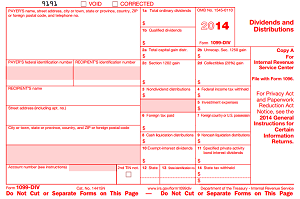 The IRS has different tax forms for every type of income imaginable. With investing, that can quickly get complicated and lead to mistakes. At the very least, you should have a basic idea of what the tax forms do and which forms to expect each year. That alone will give you a better picture of your tax costs, allowing you to
  Dividends are the big reason investors turn to
  The headlines are full of market anomalies this time of year. In December it’s the Santa Claus Rally. January it’s the ever original January Effect. After this weekend you’ll see the Super Bowl Indicator. Then comes Sell in May. It’s a seasonal thing, offering a break from the back and forth between stock market corrections and bubble headlines we’ve seen more of these past five years.