
Tariffs became a larger part of the public discourse in the late 1800s following the Civil War. A search for “tariffs” in newspapers (based in Illinois) around the time shows the extent of it.

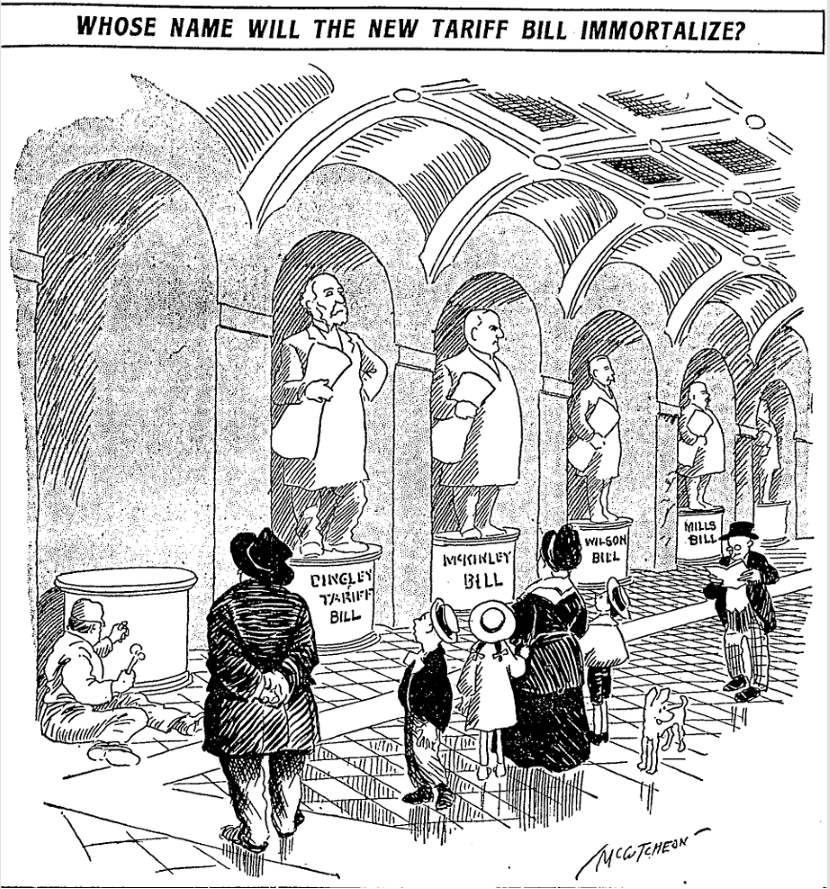
The initial bump happened in the early 1880s, peaked in 1897, picked up again in 1909, dropped off during WWI, and rose somewhat in the 1920s until it fell off during the Great Depression. The spikes coincide with Congress pushing high tariff bills, revising bills, and replacing old tariff bills with new ones.
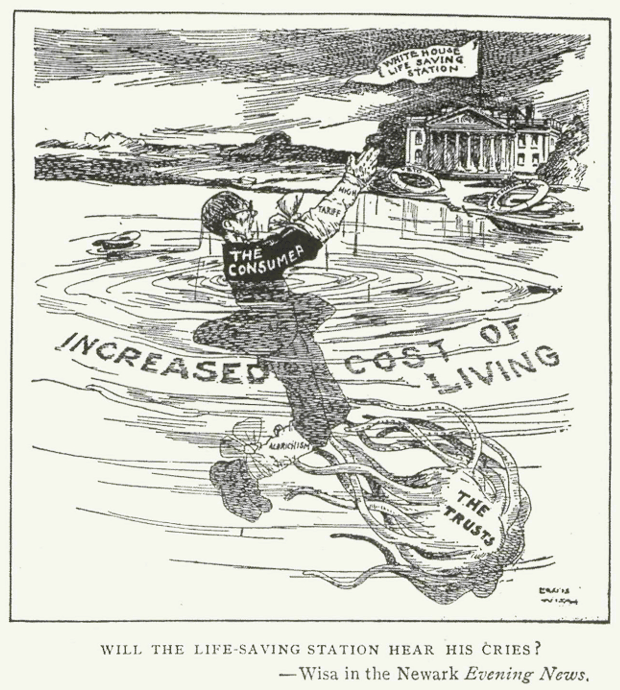
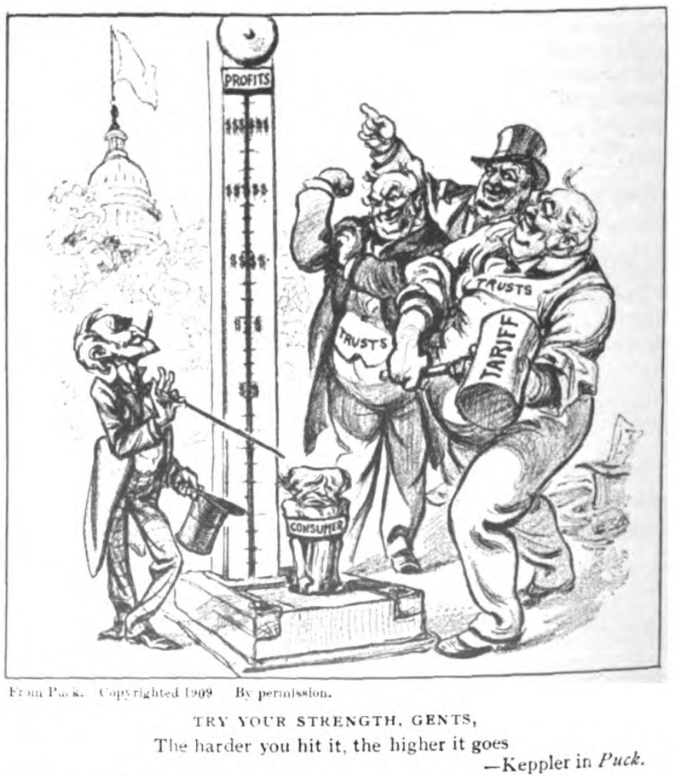
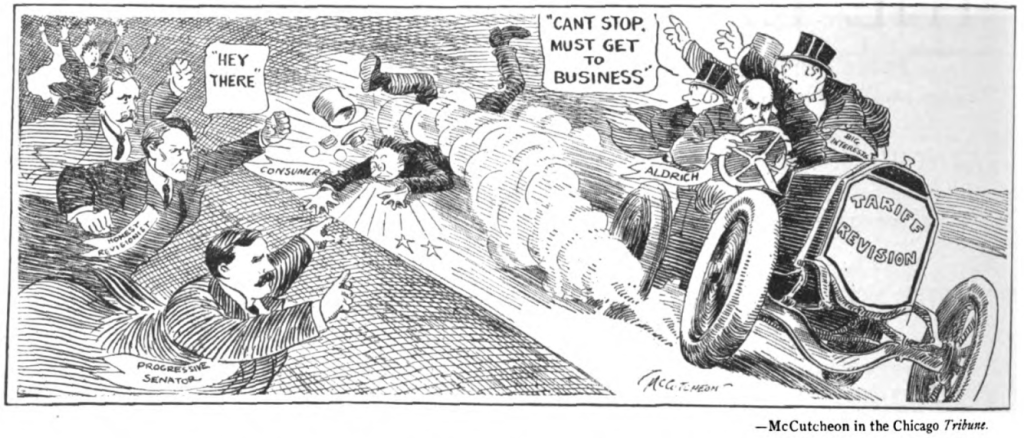
Editorial cartoons captured it all. The political messaging, the public perception, and the reality play out over and over again. Tariffs were meant to protect American businesses, farmers, and workers. Promises of high wages and overwhelming prosperity was a recurring theme. Plus, the tariffs would generate tax revenue to help fund the government and lower the national debt.
Instead, business confidence suffered from the turmoil brought about by frequent tariff revisions. Certain businesses received more protection than others. Tariff revisions and carve outs favored big business interests first. Wages went unprotected. Higher unemployment was blamed on tariffs, whether it was a direct result or not. Of course, consumers faced higher prices and worried over the rising cost of living.
Sound familiar?
An early example shows fat monopolies feeding at the trough of taxation.

The Sugar trust weighed in on and approved of “tax reform” two years later.
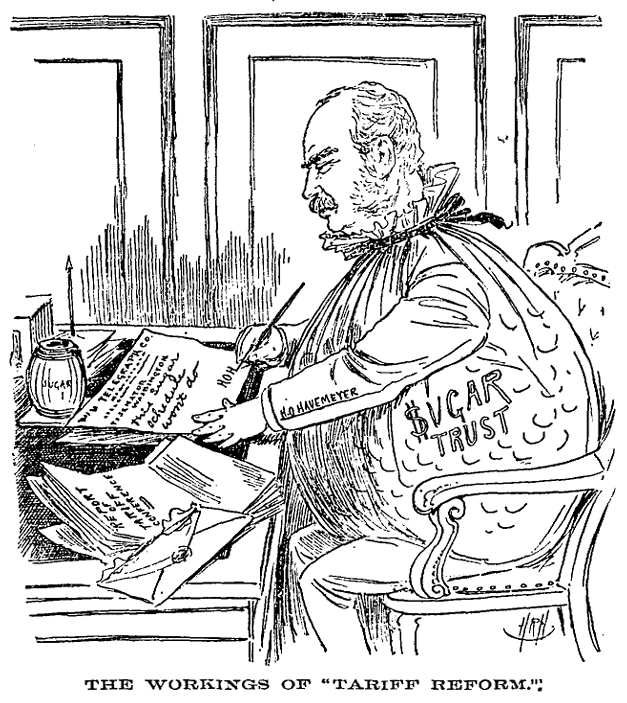
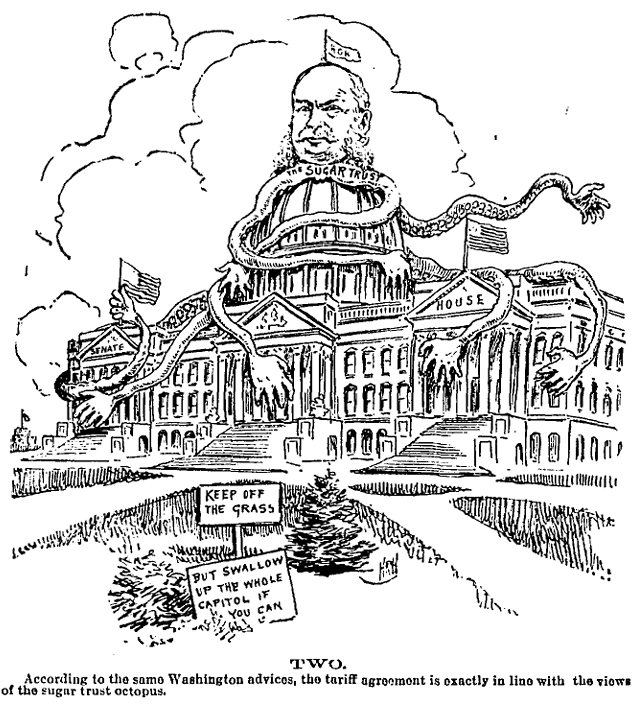
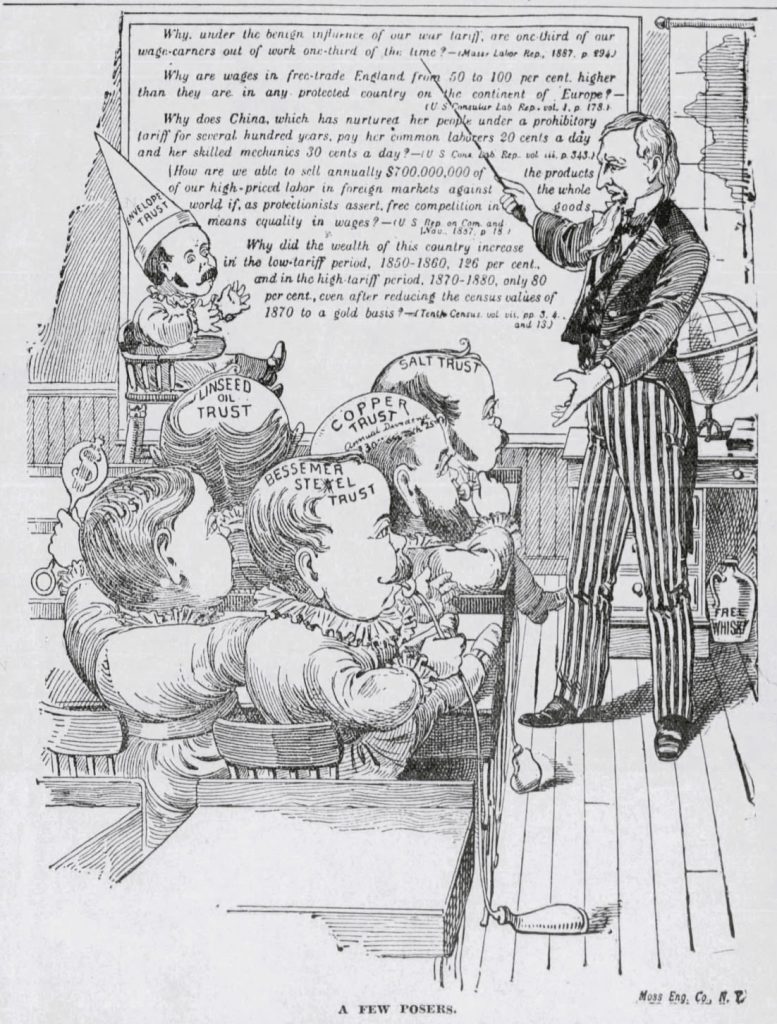
The “infant industries”, tariffs were designed to protect, got a lesson from Uncle Sam in 1888.
The self-proclaimed “infant industries” like the sugar trust were still at in 1908.
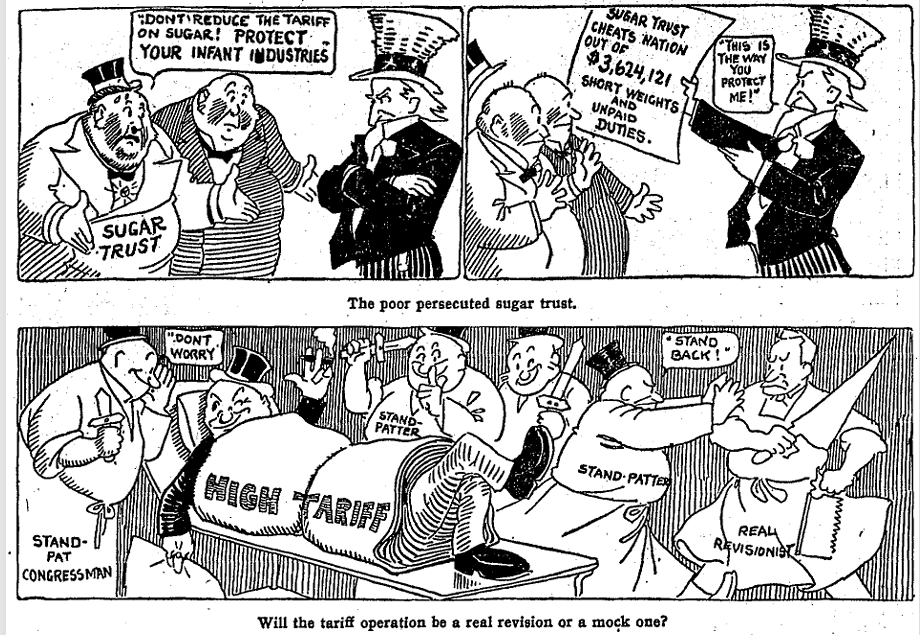
1909 brought a new battle over tariffs and a new tariff bill to argue over. The Payne-Aldrich Tariff was passed that year.




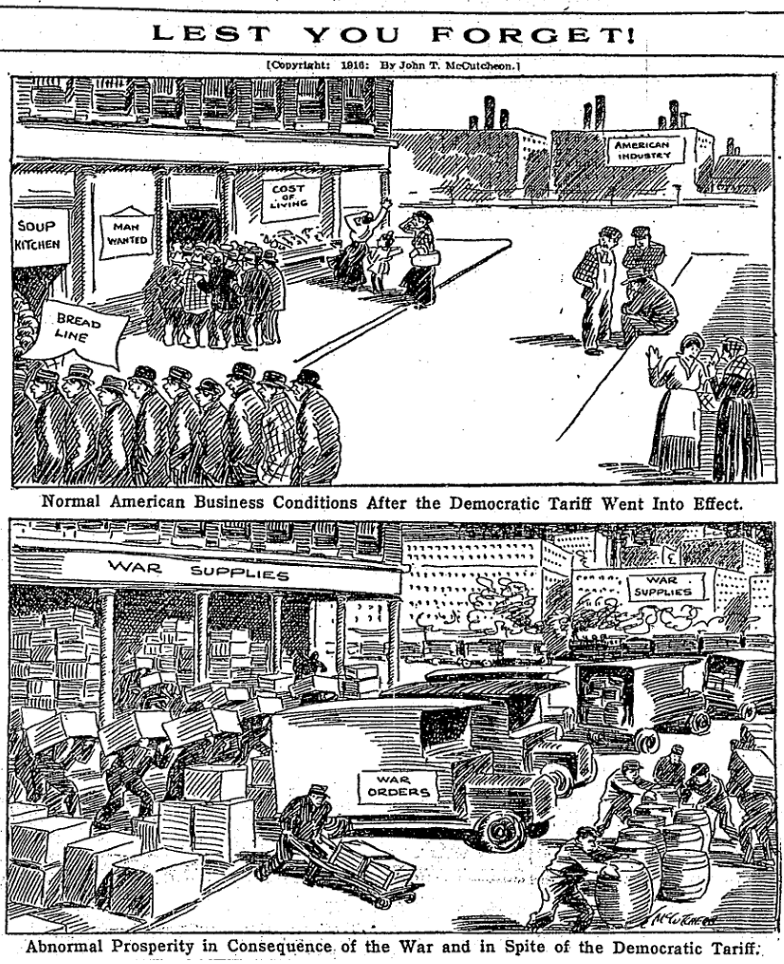
WWI brought a surge in business as the US became the supplier for the war effort. It also brought reminders of what life was like during the “tariff years” before the war.
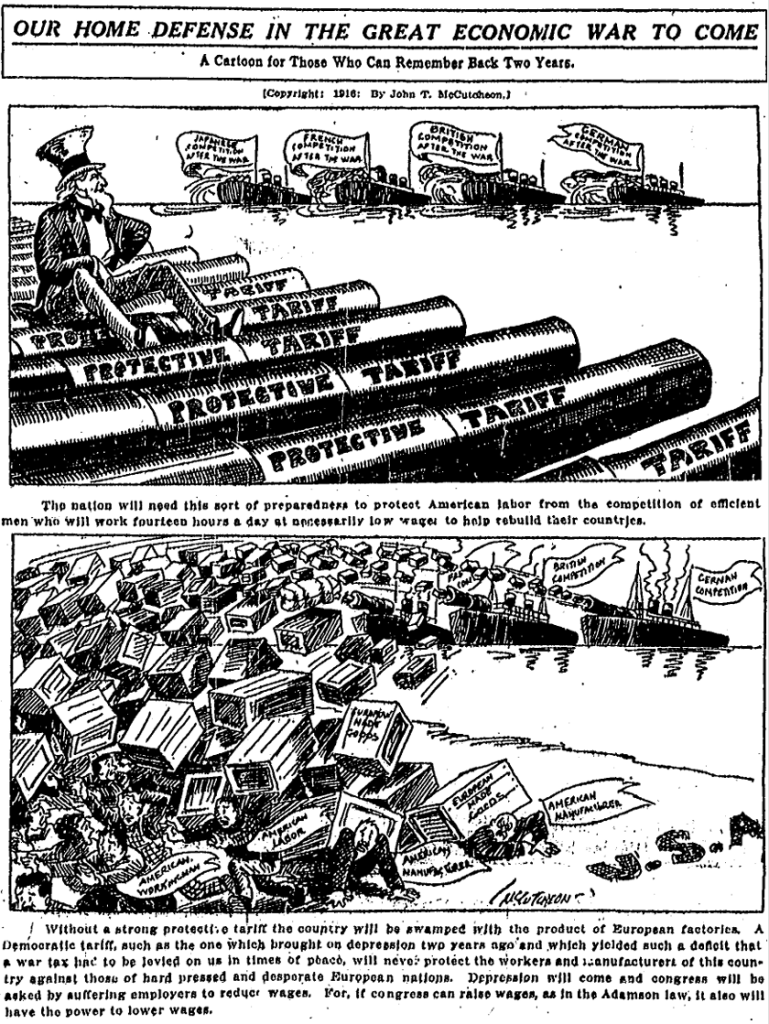
The depression of 1920-1921 struck about one year after WWI’s end. It brought renewed calls for (or warnings against) tariffs.


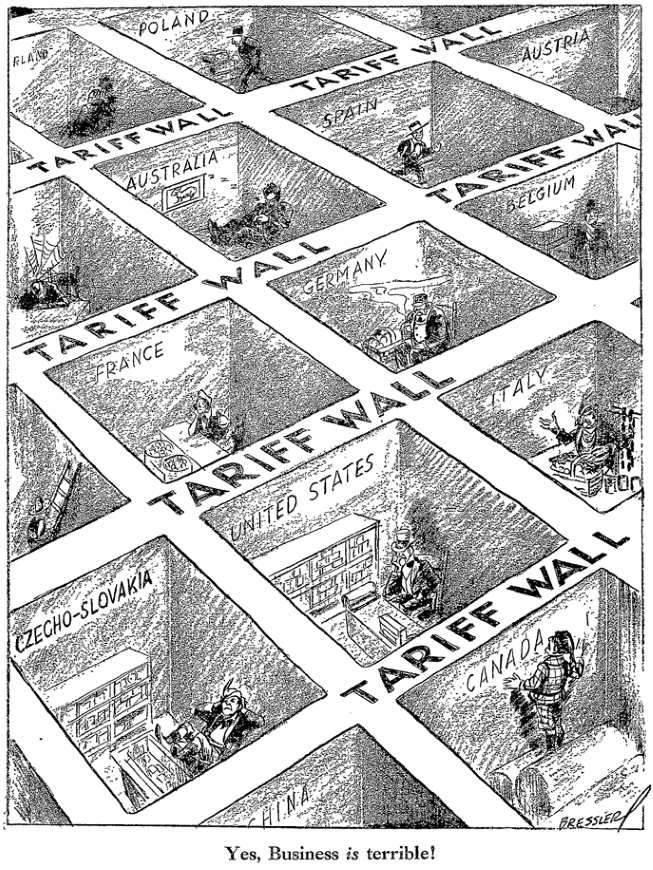
Smoot-Hawley was proposed and later passed in 1930, the outset of what became the Great Depression, to protect American business and farmers from foreign competition. Reciprocal tariffs followed, business suffered…and the rest the history.

Related Reading: