
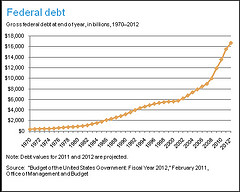
 There’s been a singular view that has swept through the nation over the past few months since the debt debacle back in August. Apparently the U.S. has too much debt. The U.S. government currently has over $15 trillion in outstanding debt obligations. Some view it as excessive, wanting it paid down to a reasonable level. Others believe it should be eliminated entirely.
This isn’t the first time that the U.S. debt has become a political hot topic. The last time was back in 1992, when then presidential hopeful, Ross Perot made eliminating the deficit a major campaign issue. Clinton eventually was elected, signed the Deficit Reduction Act of 1993, and all was better. For the most part, until you fast forward to today and it’s playing out again.
A Super Committee was set up to solve the debt problem. It failed, not surprisingly. Putting debt reduction as a major talking point in the next election cycle. On a side note to the government, don’t name a committee “Super” if it’s bound to fail. It tends to destroy all meaning of the word. Anyways, the committee’s failure enacts forced spending cuts starting in 2013. Being that far out, they’ll never see the light of day. But enough about politics.
Another way of looking at this debt issue, there is currently about $15 trillion invested in U.S. debt. Used as a safe haven for money, backed by the full faith and credit of the United States. Which is the biggest argument that the debt level is fine for now. Continue Reading…
 So you’re thinking about investing in stocks? There’s a lot to consider before finally taking the plunge into individual stocks. Additional risk factors, new learning curve, costs involved, liquidity and where to start, are just a few of the concerns. But when you finally boil it all down, the biggest thing to consider before buying stocks is time. Do you have the time? There’s a finite number of hours each week. Are you willing to give up some of them to manage your money?
 The idea of a referendum deciding the fate of a debt bailout plan and a country is interesting. But is there enough financial literacy for it? If the voters are deciding their countries fate, their financial literacy should be called into question before a referendum is called. Something that didn’t happen in Greece and the markets didn’t like it. In a normal time, Greece would be just another country in the world with problems. But these aren’t normal times.