
Novel Investor
  • Home
  • About
  • Invest with Me
  • Resources
  • An Intro To ETFs

    February 10, 2011

    ·

    Jon

    ETFsIf you currently have investments in mutual funds and want more control over your money without having to get into the tedious analysis of individual stocks or bonds, ETFs may be right for you.  ETFs have been growing in popularity and numbers over the past few years due largely to their unique advantages over mutual funds and diversification opportunities they present.

    What is an ETF?

    An ETF, or Exchange Traded Fund, is a security that tracks an index, commodity, or a basket of assets, like an index fund but trades like a stock on an exchange.  ETFs can provide the diversification of a mutual fund and the liquidity of a stock.  Most ETFs have lower expense ratios than the average mutual fund, but you will have to pay a trade commission to a broker when you buy and sell them.  With over 1000 ETFs to choose from the investment opportunities are diverse. Continue Reading…


  • Super Bowl Winner Decides The Markets Direction

    February 3, 2011

    ·

    Jon

    Super Bowl IndicatorThe Super Bowl is by far the best major sporting event, as far as I’m concerned.  Though I’d rather have a different NFC North team playing, this years game shouldn’t disappoint.  The good news is that you don’t have to root for either team if you plan on making money in the stock market, so says the Super Bowl Indicator.  The Steelers however could bring about the best possible returns.

    The Super Bowl Indicator is one of those long tracked records that some on Wall Street believe helps predict the future performance of the market.  It sounds more superstition than fact, but it does have about an 80% accuracy since the first Super Bowl.  The theory goes that if a team from the original NFL (now the NFC) wins the Super Bowl, the stock market has an up year.  However if a team from the original AFL (now the AFC) wins the Super Bowl, the market has a down year. Continue Reading…


  • Reduced Taxes With Tax Lot Accounting Methods, Part 2

    January 27, 2011

    ·

    Jon

    Tax Lot Accounting MethodsThe new tax lot accounting rules for 2011 has changed the way we track taxes on stock sales.  No longer will you be able to number crunch your way to lower taxes on your stock sales at year’s end.  Instead you’ll need to calculate cost basis throughout the year. When you track your profits/losses, you can use the tax lot accounting method that gives you the best tax savings at the time of sale.

    Tax Lot ID Refresher Course

    Which accounting method you choose will depend on your capital gains tax (which we covered in part 1) and how many tax lots you have of a particular stock.  Every time you buy a stock, whether it’s one share or 1,000 shares, that stock purchase is given a tax lot ID.  You can have multiple tax lots in the same stock. Continue Reading…


  • Reduced Taxes With Tax Lot Accounting Methods, Part 1

    January 20, 2011

    ·

    Jon

    Tax Lot Accounting MethodsWith the new tax lot accounting rules taking effect this year, getting more in depth with the tax lot accounting methods was necessary.  In the past you could crunch the numbers at years end, to figure out the lowest possible taxes on your stock sales. As of January 1st, you’ll need to know how to calculate tax basis for each investment at the time of sale.

    Throughout the year, keeping track of each stock sale (profit and loss) will be a requirement, in order to minimize your taxes at the end of the year.  Online brokers are now required to keep track of your realized gains and losses throughout the year. You can use a simple spreadsheet to do the trick as well.

    By tracking each stock sale throughout the year, you’ll be able to use the best tax lot accounting method to keep your taxes as low as possible.  Remember though, that the type of tax you pay will depend on how long you have owned that stock. Continue Reading…


  • New Tax Accounting For Stocks In 2011

    January 13, 2011

    ·

    Jon

    Tax Lot AccountingIf you own stocks or are thinking of owning stocks in 2011, you have new tax accounting methods available to you courtesy of the IRS.  The good news is that the discount brokers will be responsible for keeping track of all your stock purchases and sales starting this year.
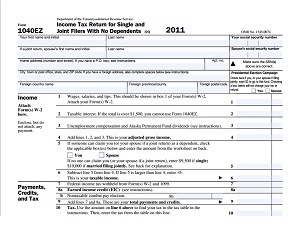
    Brokerage firms already report the sales proceeds from stocks to the IRS.  Now the brokerages will be required to report the purchase price, known as the cost basis, of all stock purchases. This also means you’ll need to know how to calculating cost basis for stock at the time of sale.

    Your Tax Lot ID And You

    Each time you purchase a stock, that position is given a tax lot id, even if you already own shares of the same stock.  A tax lot simply is a record of a securities transaction and its tax implications, including the purchase date and number of shares.

    If you purchased any new stocks this year, those purchases were given tax lot ids, allowing the IRS to track your exact profit or loss from that lot of stocks when you decide to sell them. Continue Reading…


  • Tax Cut Extension: What’s In It For You?

    December 23, 2010

    ·

    Jon

    Tax Cut ExtensionCongress finally put off the inevitable last week and passed the tax cut extension we’ve all been waiting for since the beginning of the year.  If you’re not sure how you benefit from the extension, we’ll break it down for you.

    Tax Rates

    With the signing of the tax cut extension, all income tax rates will remain the same for two more years.  So we won’t see the possibility of  rates going higher until after 2012.  It’s not really a benefit over this year but if the tax cut extension hadn’t passed we would all be paying more taxes next year and beyond.

    The tax rate on long-term capital gains and qualified dividends will also remain the same for the next two years.  The tax rate for both will max out at 15% through 2012.  If you’re in one of  the two lowest tax brackets (10% or 15%) you will have a 0% capital gains rate.  You have until the end of the year to rebalance your portfolio to take advantage of these tax rates for the year. Continue Reading…


Previous Page
1 … 228 229 230 231 232
Next Page

Join the library.

Access over 1,100 research papers, writings, transcripts, and more from the brightest minds in finance.

Learn More

Learning

  • Investor Library
  • Book Notes
  • Investor Quotes

Return Quilts

  • Asset Class Returns
  • S&P Sector Returns
  • International Stock Market Returns
  • Emerging Markets Returns
  • Historical Returns Data

Connect

  • Bluesky
  • Twitter
  • Facebook
  • RSS Feed
  • Home
  • About
  • Contact

© Novel Investor · All Rights Reserved · Terms of Use · Privacy Policy · Disclaimer