
Novel Investor
  • Home
  • About
  • Invest with Me
  • Resources
  • The Behavior of a Successful “Gambler”

    April 19, 2019

    ·

    Jon

    Finishing How to Take a Chance (notes) led me to chase down the source of a few quotes from the book. The last post was a result of that distraction. Today’s post is another — and the last of that odyssey.

    In 1902, a guy named Clemens J. France wrote a study called The Gambling Impulse. It’s interesting only in the sense that he took a biological and historical perspective of gambling and chance.

    The summarized version is this. Gambling has been around forever, literally since the first utterance of “Wanna bet?” It can be traced back several thousand years — Ancient Egypt, Greece, Rome, and to 2100 B.C. China. Biologically, its a battle of hope and fear, to provide a level of certainty in life. If you plan to glance through the 44 pages, the section on luck, with examples of superstitious beliefs, offered a good laugh. This seemed relevant:

    In London about Throgmorton Street (the paradise of stock brokers), there used to sit a man with a bag of nuts into which passers by thrust a hand, and if they guessed correctly the number, they would be paid a penny for each, if wrong, the guesser paid a penny. Many a speculator regulated his ‘bulling’ and ‘bearing’ by his successful or unsuccessful dip into the bag.”

    To think that a trader’s (in)ability to guess the number of nuts determined their feeling explains a lot about irrational markets. Continue Reading…

  • Ed Thorp on Learning from Gambling

    April 12, 2019

    ·

    Jon

    Ed Thorp has a skeptical mind. That’s what got him to question the belief that you couldn’t beat the casino. That same skepticism eventually drove him to question financial markets. During an interview, Thorp explained that journey and what he learned.

    The big difference between gambling and investing is in the probabilities. Most gambling games have fixed probabilities. Precise accuracy is possible.

    In the game of blackjack, if you know the number of decks, then you know how many of each card exists (assuming the House plays fair), and you can work out the odds from there.

    Not so with investing. The complexity of markets, the number of factors involved, make precision impossible. Here’s Thorp: Continue Reading…


  • Steven Crist: Second Level Thinking at the Racetrack

    April 10, 2019

    ·

    Jon

    What does horse racing have to do with investing? Everything. The key is to think of “horses” as “stocks.”

    Most gambling, like blackjack, roulette, or craps, involves betting against the House. Not so at the horse track. Instead, you bet against other bettors and your, and everyone else’s, bets on different horses (stocks) change the odds.

    Not surprising, how people approach betting on horses is fairly similar to how people bet on stocks.

    Steven Crist says as much in a chapter he wrote for Bet with the Best, as he explains how to bet on horses. But as I said at the top, swap out “horse” with “stock” and you’ll see the similarities with investing: Continue Reading…


  • Quarterly Reading – Spring ’19

    April 5, 2019

    ·

    Jon

    The end of March means it’s time for another quarterly reading update. A vacation in February got me back on track reading-wise. It’s amazing the number of pages you can get through when you disconnect from the internet for 10 days. Anyways, onto the books.

    Here’s what I’ve been reading the past three months: Continue Reading…


  • Where Less is More

    April 3, 2019

    ·

    Jon

    Compounding works because somebody started something decades ago and never stopped. When you combine consistency with a simple investment plan some wonderful things happen.

    Unfortunately, simplicity is often overlooked.

    And I’m not just talking about investment plans. Yes, the finance industry is notorious for coming up with complex strategies to warrant the high fees they’re charging. Can a simpler strategy produce similar results? Most likely. But who would pay a similar high fee for it?

    I may be going out on a limb here, but it seems to me that if the industry spent more energy on getting clients/customers to maintain consistency and less energy on creating elaborate strategies, both the industry and their clients would be better off in the long run. Conveniently, consistent compounding benefits both investors and those who charge low fees too. Continue Reading…


  • Concentrated Investing by Benello, Van Biema, Carlisle

    April 1, 2019

    ·

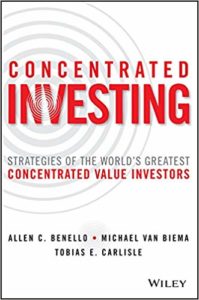
    Concentrated InvestingBuy the Book: Print | eBook

    Concentrated Investing profiles eight investors with different investment styles to figure out the principles behind their returns. Was it due to their behavior, the source of capital, the number of investment, or position sizing? The authors answer those questions then look at what the data says.

    The Notes

    Continue Reading…


Previous Page
1 … 99 100 101 102 103 … 233
Next Page

Join the library.

Access over 1,100 research papers, writings, transcripts, and more from the brightest minds in finance.

Learn More

Learning

  • Investor Library
  • Book Notes
  • Investor Quotes

Return Quilts

  • Asset Class Returns
  • S&P Sector Returns
  • International Stock Market Returns
  • Emerging Markets Returns
  • Historical Returns Data

Connect

  • Bluesky
  • Twitter
  • Facebook
  • RSS Feed
  • Home
  • About
  • Contact

© Novel Investor · All Rights Reserved · Terms of Use · Privacy Policy · Disclaimer