
Novel Investor
  • Home
  • About
  • Invest with Me
  • Resources
  • Wise Words from the Lone Wolf, Bernard Baruch

    July 29, 2022

    ·

    Jon

    Bernard Baruch was known as the Lone Wolf of Wall Street, but he wore many hats. He was a speculator, an investor, a deal maker, a philanthropist, and an advisor to Presidents.

    Baruch was born in Camden, South Carolina in 1870. The family moved to New York when he was 10. He got his first job on Wall Street in 1889 as a runner for $3 a week. It was there he first learned the art of arbitrage, reorganizations, and speculation.

    He became a partner at A.A. Housman & Company at age 25, playing speculator and dealmaker for the firm. In one instance, he put arbitrage skills to work after learning of the potential end to the Spanish-American War. It was July 3rd. The New York exchange was closed on the 4th. So he bought stocks on the London exchange, expecting to sell them for a big profit when the exchange opened on the 5th. When the New York exchange opened on the 5th, his stock prices soared.

    In another instance, he played dealmaker in a tobacco merger. He convinced Liggett & Myers to merge with Union Tobacco. At the last minute, a third company, Continental Tobacco, joined to create the monopoly known as The American Tobacco Company. Baruch earned a cool $150,000 for his effort.

    By 33, he was a millionaire, bought a seat on the exchange, and set out on his own. Continue Reading…

  • 3 Keys to Successful Investing

    July 27, 2022

    ·

    Jon

    Investing can be simply defined as using money to make more money. How does one go about doing that? That’s where things can get overly complicated but the answer is simpler than you might think.

    One person who distilled it wonderfully was Bill Miller. He offered a simple three-part answer:

    When I first got into the business, I met Bill Ruane, Warren Buffett’s friend who ran Ruane Cunniff. Somebody asked him, “If you could give some advice about investing, what would it be?” And as Ruane related this story to me, he said, “I told the guy that if he reads Security Analysis and The Intelligent Investor and then reads all of Warren Buffett’s annual reports, and if he really understands what they were saying, he will know everything there is to know about investing.”

    I thought about that advice for a number of years and agree with it, and then I heard this comment from two-time World Series of Poker champion Puggy Pearson: “Ain’t but three things to gambling. Number one: knowing the 60/40 end of a proposition. Number two: money management. And number three: knowing yourself.” This advice is succinct and encompasses all you really need to know about how to approach investing.

    Here’s why: Knowing the 60/40 end of a proposition means knowing when you invest that the odds are in your favor. However you compute the odds, the odds have to be in your favor.
    Continue Reading…


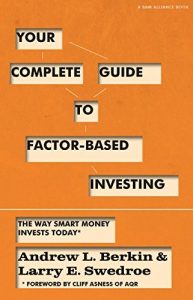
  • Your Complete Guide to Factor-Based Investing by A. Berkin & L. Swedroe

    July 20, 2022

    ·

    Your Complete Guide to Factor-Based Investing book coverBuy the Book: Print | eBook

    The guide digs into the growing factor zoo to find the factor premia worth considering in a portfolio. The authors introduce five criteria any factor should meet, discuss the seven factors that qualify, and why other factors fall short of consideration.

    The Notes

    Continue Reading…


  • Wise Words from Peter Cundill

    July 15, 2022

    ·

    Jon

    Peter Cundill was a Canadian value investor in the most traditional sense. Yet, he found Ben Graham almost by chance. A friend handed him a copy of SuperMoney just before he got on a flight home for Christmas. The chapter on Graham solidified his philosophy on investing.

    One way Graham found value was to study assets on the balance sheet to find stocks trading below liquidation value. Cundill followed the same approach.

    He often described his approach as buying dollars for forty cents. Over the 33 years he ran the Cundill Value Fund, he outperformed the market earning a 15.2% average return for shareholders.

    Two things stand out from Cundill’s career. He had an insatiable curiosity and a willingness to adapt. Markets change. Those changes can render a strategy ineffective. Cundill learned that a strict Graham approach wouldn’t cut it in changing markets. He needed to adapt his strategy to the changes.

    One of the first things he did was to look beyond North America. His curiosity dragged him to new countries to experience firsthand its culture and business environment. He became an early adopter of a global approach. Continue Reading…


  • 7 Timeless Value Investing Principles from 1922

    July 13, 2022

    ·

    Jon

    The stock market is a giant distraction machine that drives investors to act against their best interests. The daily price swings. The clickbaity headlines. The 280-character hot takes on social media. Every bit of it feeds speculative urges and subtracts from long-term success.

    What does matter? Timeless investing principles exist to remind us of the simple concepts that drive success. Focusing on the long run, avoiding excessive risks, keeping costs low, limiting the number of trades, and understanding what’s in your portfolio are examples of common sense ideas that have kept investors out of trouble for a few centuries.

    A case in point is a list of investment principles by Morrell Walker Gaines in his 1922 book, The Art of Investment, that could have been written yesterday. He intended for the book to be a foundation for the average investor to learn from and build off.

    What’s interesting is that Gaines had similar beliefs as Ben Graham. His seven principles are based on value, prioritize investment over speculation, and proposed that investing should be treated as a business. Continue Reading…


  • 2022: First Half Returns

    July 8, 2022

    ·

    Jon

    The story of markets is one of transition. Bull markets, taken to excess, lead to bear markets and back again. The first half of 2022 saw the transition to a bear market in stocks.

    Yet, investors expecting their bond allocation to pick up the slack due to the decline in stocks were disappointed. Uncertainty around inflation and rising interest rates negatively hit bond prices, making it one of the worst starts to the year for both stock and bonds.

    Bear markets are never enjoyable but they have some benefits. First, bear markets wash away the widespread complacency and easy money mentality in late-stage bull markets. Investing is never easy, but there are moments in the market cycle where it appears that way. Investors who confuse ease with a rising market get punished the most when the market turns.

    Second, bear markets test your tolerance to drawdowns. If the performance of your portfolio makes you queasy, now is a great time to tweak your asset allocation to something you can stomach. This is especially true if this is your first bear market. Remember, you’ll never eliminate losses from your portfolio. The key is to find an asset allocation that fits your risk tolerance so you can stick to it in good times and bad.

    Third, bear markets are long-term buying opportunities. Investors who diligently add new money to their portfolios every month bought stocks at lower and lower valuations over the past six months. And lower valuations lead to better returns. Continue Reading…


Previous Page
1 … 53 54 55 56 57 … 232
Next Page

Join the library.

Access over 1,100 research papers, writings, transcripts, and more from the brightest minds in finance.

Learn More

Learning

  • Investor Library
  • Book Notes
  • Investor Quotes

Return Quilts

  • Asset Class Returns
  • S&P Sector Returns
  • International Stock Market Returns
  • Emerging Markets Returns
  • Historical Returns Data

Connect

  • Bluesky
  • Twitter
  • Facebook
  • RSS Feed
  • Home
  • About
  • Contact

© Novel Investor · All Rights Reserved · Terms of Use · Privacy Policy · Disclaimer