
Novel Investor
  • Home
  • About
  • Invest with Me
  • Resources
  • Understanding Tax Form 1099-INT

    February 18, 2014

    ·

    Jon

    Investors should keep an eye out for some extra tax forms each year. When you deal with interest income, form 1099-INT is the form you need to get your tax return done.

    This form isn’t limited to investors either. Anyone earning interest on savings accounts, money market accounts, CDs, or bonds is a potential candidate.

    However, it won’t report earnings from mutual funds invested in bonds. Mutual fund earnings are reported on 1099-DIV for dividends and distributions.

    This can be confusing without some good tax software or an accountant to help sort it out. It’s also why TurboTax comes in handy when I do my tax returns every year because it sorts out all the tax forms for me. Continue Reading…

  • Happy Hour: The Holiday Premium

    February 14, 2014

    ·

    Jon

    Welcome to the end of the week and another edition of Happy Hour! Just sit back, relax, and enjoy your end of the week roundup of all things interesting in the land of money.

    The Holiday Premium

    While you’re lavishing your partner with cards, candy, flowers, and dinner today, understand you could have gotten it all for less tomorrow. Ah…the price of love.

    This is nothing new. Holidays are big business. And businesses take advantage of our willingness to conform. Continue Reading…


  • Breaking Down Form 1099-DIV

    February 13, 2014

    ·

    Jon

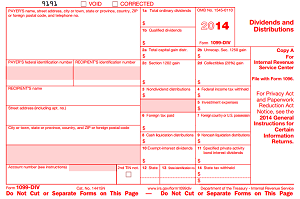
    Investors with taxable accounts have a bigger pile of tax forms to deal with every year. Form 1099-DIV is one form you get when your investments pay out dividends and distributions. If you’re like me, it means you spend a little more quality time with tax software each year. Or, maybe you pass it off to your accountant. But do you really understand what is reported in each box of a 1099-DIV? Do you know how it affects your taxes or your investments?

    Unfortunately, not all dividends and distributions are taxed the same. And it’s not always easy to figure out. I use TurboTax for help when I get stuck. Regardless, you should still understand what is reported on the 1099-DIV, the tax consequences of each box, and how it might affect your investments. In turn, it might even help you build a more tax efficient investment strategy and lower your taxes in the long run. Continue Reading…


  • Tax Benefits of Qualified Dividends

    February 11, 2014

    ·

    Jon

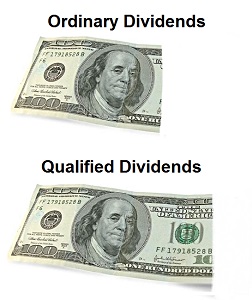
    Qualified DividendsDividends tend to get lumped as one single form of investment income. But the IRS doesn’t see it that way, dividing the tax on dividends into two types: ordinary and qualified dividends. This is good to know around tax time. But it’s just as important when choosing investments for a taxable account, since taxes are another cost that eat into your returns.
    Ordinary Dividends

    First, all dividends are considered ordinary dividends. The problem, of course, is how we loosely use the term dividends to describe any type of payout from stocks, mutual funds, savings accounts, or other investments. Sometimes that “dividend” is actually interest income or a capital gains distribution. Continue Reading…


  • Happy Hour: Time to Rethink Business News?

    February 7, 2014

    ·

    Jon

    Welcome to the end of the week and another edition of Happy Hour! Just sit back, relax, and enjoy your end of the week roundup of all things interesting in the land of money.

    Time To Rethink Business News?

    There’s a fine line between making the news and reporting it. The role business news plays or should play gets questioned often. Who does it cater to, really? Continue Reading…


  • Tax Forms Every Investor Should Know About

    February 6, 2014

    ·

    Jon

    Investment Tax FormsThe IRS has different tax forms for every type of income imaginable. With investing, that can quickly get complicated and lead to mistakes. At the very least, you should have a basic idea of what the tax forms do and which forms to expect each year. That alone will give you a better picture of your tax costs, allowing you to build a more tax efficient portfolio.

    Investment income comes in three forms: earned interest, dividends, and capital gains. Each is taxed differently. Earned interest is regular income subject to federal income tax while dividends and capital gains has its own tax rates.

    You’ll get separate tax forms for each income type. But there’s a good chance you’ll get multiple forms for each investment too. For instance, TD Ameritrade sends me a consolidated 1099 every year for the stocks and ETFs I own, which is just a 1099-INT, 1099-DIV, and 1099-B rolled into one big statement. Below are the more common tax forms you’ll receive for investment income. Continue Reading…


Previous Page
1 … 177 178 179 180 181 … 232
Next Page

Join the library.

Access over 1,100 research papers, writings, transcripts, and more from the brightest minds in finance.

Learn More

Learning

  • Investor Library
  • Book Notes
  • Investor Quotes

Return Quilts

  • Asset Class Returns
  • S&P Sector Returns
  • International Stock Market Returns
  • Emerging Markets Returns
  • Historical Returns Data

Connect

  • Bluesky
  • Twitter
  • Facebook
  • RSS Feed
  • Home
  • About
  • Contact

© Novel Investor · All Rights Reserved · Terms of Use · Privacy Policy · Disclaimer