Novel Investor
  • Home
  • About
  • Invest with Me
  • Resources
  • Lessons from Three Ben Graham Speeches

    February 6, 2019

    ·

    Jon

    Benjamin Graham spent time throughout the 1940s and 50s lecturing about things he knew nothing about. The speeches came in the disguise of a “Market Outlook.” People wanted to know what would happen next. Graham’s response was typical:

    The subject assigned to me for this afternoon is one about which, precisely speaking, I know nothing.

    Those were the first words out of his mouth at a lecture given in November of 1952. Then he gave them a history lesson of sorts.

    He repeated that in similar fashion in other speeches too. In 1942, inflation worries were the topic du jour heading into WWII. In 1950, people wanted to know how the second half of the century would turn out. In each case, Graham offered some lessons instead.

    What follows are a few of those lessons from those three speeches mentioned, mostly without comment. Continue Reading…


  • Excerpts from the Latest Marks and Klarman Letters

    February 1, 2019

    ·

    Jon

    Howard Marks released his latest memo this week and Seth Klarman’s letter was leaked last week.

    Marks’ Memo, titled “Political Reality Meets Economic Reality” covers just that. He spends the time on the second and third order consequences on two worrying trends in politics: tariffs and anti-capitalist sentiment.

    Politicians perfected the offer of easy solutions to complex problems because they want soundbites that quickly get you to “yes.” Diving into second and third level consequences ruins their soundbite and puts votes at risk.

    The memo is worth reading for Marks’s balanced take. I’ll add that the Appendix on “The Tax System Explained in Beer” is not to be missed. Continue Reading…


  • Ben Graham’s Simple Strategy for Defensive Investors

    January 30, 2019

    ·

    Jon

    In January 1949, Ben Graham spoke before the New York State Bankers Association to encourage bankers to advise customers on sound investment policy. What surprised people then was his push for simplicity.

    You can make investing as simple or complicated as you want. Simple strategies tend to require less knowledge, fewer decisions, and generally easier to manage. Complicated strategies tend to bring added costs (higher fees and behavioral costs) and can introduce unknown, often uncompensated, risks.

    Graham’s simple strategy: divide your portfolio between government bonds and a diversified basket of common stocks or “investment — fund shares — instead of a selected common stock list.” He purposely left out corporate bonds, preferred stocks, and the like, as unneeded risks for a defensive investor.

    If you’re not familiar, Graham divided investors into two categories — defensive and aggressive — defined like this: Continue Reading…


  • Confusion De Confusiones by Joseph De La Vega

    January 25, 2019

    ·

    Confusion De ConfusionesBuy the Book: Print

    Joseph De La Vega’s Confusion De Confusiones is the earliest known book on the trading practices of a stock market. Set as four separate conversations between three people, you get a sense of what investing and speculating was like in the mid to late 1600s.

    The Notes

    Continue Reading…


  • Some Book Notes

    January 25, 2019

    ·

    Jon

    Several years ago, I read Mortimer Adler’s How to Read a Book after seeing it discussed on Farnam Street. A book about reading a book sounds like a joke, I know, but it’s surprisingly not.

    From an early age we’re taught to read, but not how to learn and fully understand something from reading. The book is an instruction manual on that process.

    I won’t rehash it all here (read the book if you’re interested), but I was already doing part of that process like marginalia — highlighting, underlying, circling keywords, notes in the margins, etc.

    I highlighted and underlined the hell out of that book but never bothered to summarize or go back through it to take notes. But I quickly recovered on the next book — marginalia, summary, notes, the works — and maintained some consistency after that. Continue Reading…


  • The Little Book That Still Beats the Market by Joel Greenblatt

    January 18, 2019

    ·

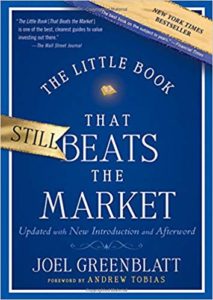
    The Little Book that Still Beats the MarketBuy the Book: Print | eBook

    Joel Greenblatt’s Little Book delivers a crash course in value investing. He covers how to view the market, why most people fail to beat the market, metrics for quality and low priced stocks, and how his Magic Formula works.

    The Notes

    Continue Reading…


Previous Page
1 … 102 103 104 105 106 … 233
Next Page

Join the library.

Access over 1,100 research papers, writings, transcripts, and more from the brightest minds in finance.

Learn More

Learning

  • Investor Library
  • Book Notes
  • Investor Quotes

Return Quilts

  • Asset Class Returns
  • S&P Sector Returns
  • International Stock Market Returns
  • Emerging Markets Returns
  • Historical Returns Data

Connect

  • Bluesky
  • Twitter
  • Facebook
  • RSS Feed
  • Home
  • About
  • Contact

© Novel Investor · All Rights Reserved · Terms of Use · Privacy Policy · Disclaimer