Novel Investor
  • Home
  • About
  • Invest with Me
  • Resources
  • Peter Bernstein’s Checklist for “Growth Companies”

    June 26, 2020

    ·

    Jon

    There is a big difference between a growth stock and a company that grows.

    …the term “growth stock” is meaningless; a growth stock can be identified only in hindsight — it is simply a stock which went way up. But the concept of “growth company” can be used to identify the most creative, most imaginative management groups; and if, in addition, their stocks are valued at a reasonable ratio…over a period of time, the odds are favorable for appreciation in the future. — Peter Bernstein

    Bernstein believed that investors needed to separate “growth stocks” from “growth companies.” Because one was a label slapped on anything with a high price relative to earnings or assets. The other had a few characteristics that made it a rare exception in the business world. Continue Reading…

  • Protection from Ourselves

    June 24, 2020

    ·

    Jon

    Ben Graham spoke to a group of bankers in 1951. It was unique in that he addressed their increasing role as investment advisors. He offered some timeless advice for advisors and investors alike.

    He began with a brief history of portfolio construction — stocks and bonds. For years, bonds were the smart safe investment of choice for bankers and individuals, while stocks were speculative. That all changed in the early 1920s.

    People learned stocks held a few advantages over bonds — better inflation protection, capital appreciation, and, in general, a better overall return. And eventually, stocks gained a more prominent foothold in portfolios.

    But it wasn’t all good news. Stocks had a few downsides too. Three, in particular, stood out to Graham. Continue Reading…


  • Ben Graham: The Other Advantage of Diversification

    June 17, 2020

    ·

    Jon

    Most people understand the idea of not putting all your eggs in one basket. Diversification reduces portfolio risk by spreading your money across a number of stocks.

    In 1952, Ben Graham wrote about another benefit of diversification that doesn’t get talked about as much:

    In this connection I want to throw out a broad and challenging idea — that from a scientific standpoint common stocks as a whole may be regarded as an essentially undervalued security form. This point grows out of the basic difference between individual risk and overall or group risk. People insist on a substantially higher dividend return and a still larger excess in earnings yield for common stocks than for bonds, because the risk of loss in the average single common stock issue is undoubtedly greater than in the average single bond. But the comparison has not been true historically of a diversified group of common stocks, since common stocks as a whole have had a well-defined upward bias or long-term upward movement. This in turn is readily explicable in terms of the country’s growth, plus the steady reinvestment of undistributed profits, plus the strong net inflationary trend since the turn of the century.

    Continue Reading…


  • The Interpretation of Financial Statements by Benjamin Graham

    June 10, 2020

    ·

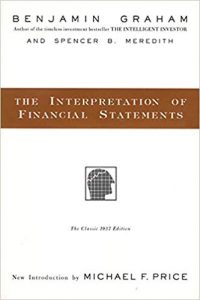
    The Interpretation of Financial StatementsBuy the Book: Print

    Published in 1937, Ben Graham covers the basics of accounting and financial statements. It’s a condensed guide on reading the balance sheet and income statement, explaining common metrics, and tips on how to determine the soundness of a company.

    The Notes

    Continue Reading…


  • Cartoons of the 1929 Crash

    June 5, 2020

    ·

    Jon

    Newspapers have limited real estate. It should be no surprise that the stock market failed to make the front page every day of 1929. It was competing against news about prohibition, bootleggers, tariffs, and politics for the top spot.

    The market really only dominated the headlines for about two weeks out of the year. The big week was at the end of October. The rest was sporadically spread out during the year.

    But in those two weeks, editorial cartoonists wonderfully captured the speculative phenomenon of the market bubble and crash. The gambling nature, the easy money mentality, mistiming the top, the promises never to do it again…until next time, they captured it all.

    After digging through the headlines of 1929, the cartoons were too obvious to be ignored, so I grabbed some to share. Take a look: Continue Reading…


  • How to Take a Chance by Darrell Huff

    June 3, 2020

    ·

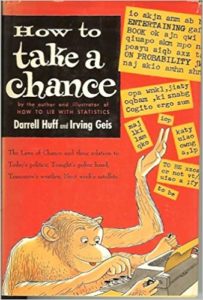
    How to Take a ChanceBuy the Book: Print

    Darrell Huff offers an introduction to the theory of probability that you can find in all aspects of life. He weaves in bits of humor and literature to explain the different concepts with real-life examples of coin tosses, card games, roulette, and dice that should help you avoid expensive mistakes.

    The Notes

    Continue Reading…


Previous Page
1 … 82 83 84 85 86 … 232
Next Page

Join the library.

Access over 1,100 research papers, writings, transcripts, and more from the brightest minds in finance.

Learn More

Learning

  • Investor Library
  • Book Notes
  • Investor Quotes

Return Quilts

  • Asset Class Returns
  • S&P Sector Returns
  • International Stock Market Returns
  • Emerging Markets Returns
  • Historical Returns Data

Connect

  • Bluesky
  • Twitter
  • Facebook
  • RSS Feed
  • Home
  • About
  • Contact

© Novel Investor · All Rights Reserved · Terms of Use · Privacy Policy · Disclaimer