
Novel Investor
  • Home
  • About
  • Invest with Me
  • Resources
  • The Stock Market Pendulum

    February 10, 2021

    ·

    Jon

    Where are we now? It’s a question often asked about the stock market cycle that leaves everyone wanting. That’s because the nature of markets makes precise answers impossible.

    So instead, most responses come in the form of analogies. Baseball innings are a popular one. “What inning is the market in today?” “The seventh inning, hope that helps.”

    A pendulum swinging back and forth is a better example. Howard Marks uses it in both of his books to describe the market cycle. Edwin Lefevre even used it back in 1901.

    Robert Kirby, an investment adviser who conceived of the coffee can portfolio, gave one of the better descriptions of the market pendulum during a talk in April 1999: Continue Reading…

  • The High Price of Free Trades

    February 5, 2021

    ·

    Jon

    The cost of trading may be higher than its ever been even though trading is free. In a bygone era, the cost of trading was mostly apparent. A commission was charged on every transaction.

    Commissions acted like a speed bump or a governor on a car’s engine. It was tangible. It was obvious. It forced investors to slow down, realize a cost was involved, that had to be overcome to make a profit. It also didn’t take a genius to know how the broker made money.

    Today that speed bump is gone.

    There’s a second cost of trading that’s less obvious and easily overlooked. It’s self-imposed. It’s driven by human nature. It comes in the form of errors and mistakes. And, put simply, that behavior can be manipulated and extremely costly.

    Warren Buffett once warned about the role brokers played in the markets (in relation to derivative securities), which seems especially relevant today. Continue Reading…


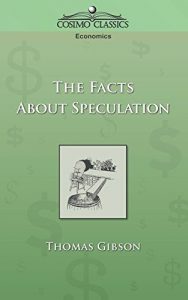
  • The Facts about Speculation by Thomas Gibson

    February 3, 2021

    ·

    The Facts About Speculation book coverBuy the Book: Print | eBook

    Thomas Gibson warns of the repeated mistakes made when people speculate in the stock market. The classic, written in 1923, adds historical context to long-held investing advice.

    The Notes

    Continue Reading…


  • The Biggest Short Squeeze of the Last Century

    January 29, 2021

    ·

    Jon

    An epic stock market battle took place in 1901. Two heavyweights fought for control of a railroad, cornered the market, and forced the biggest short squeeze of the last century.

    The Union Pacific was a railroad nobody wanted to touch, not even J.P. Morgan, in 1898. It was mired in bankruptcy — receivership in the hands of the government. But Edward Henry Harriman saw an opportunity.

    Through a syndicate of backers —  the Vanderbilts, Rockefellers, Goulds, Ameses, and Kuhn, Loeb & Co. — Harriman took control of the road. In total, they paid $75 million for 1,800 miles of railroad and got every penny back in profits within three years.

    Harriman recognized that expansion through acquisition was the most efficient way to lower costs and ensure profitability for Union Pacific. He quickly bought up competing railroads until Union Pacific dominated the U.S. west of Omaha.

    Harriman needed to expand east. So he set his sights on a key acquisition. Chicago was the railroad hub of the country. Anyone moving people or products by rail from east to west, or vice versa, had to go through Chicago. The Chicago, Burlington & Quincy Railroad was a critical piece in controlling that movement. Buying the Burlington railroad would make the Union Pacific the strongest railroad in the country. Continue Reading…


  • Buffett and Munger Explain How to Avoid a Bubble

    January 27, 2021

    ·

    Jon

    The word bubble gets tossed around loosely these days. Depending on who you listen to, there’s a bubble in stocks, bonds, housing, cryptocurrency, and a few others I’m surely missing.

    There’s no way it’s all true. Not everything has to end in a bubble and a crash but it will happen eventually because humans are great at finding new ways to repeat history.

    Of course, Warren Buffett and Charlie Munger have made a career of profiting from those repeated mistakes. Their understanding of history, human nature, and the experience of a few bubbles in their time allows them to recognize and avoid what draws so many people in.

    Buffett explains why it happens this way: Continue Reading…


  • Trading Sardines

    January 22, 2021

    ·

    Jon

    One of the big lessons Ben Graham taught in The Intelligent Investor was the difference between investing and speculating. He knew how easily the market distracts investors from their original purpose.

    Most investors start off with the idea of compounding their money over a long period of time. But some of them are bound to get sidetracked.

    Before they know it, some investors start feeding their impulses triggered by Mr. Market’s manic moods. Their emotions take over. Stocks become pieces of paper, rather than portions of a business, to trade in and out of. Price moves become the only factor behind their decisions.

    Seth Klarman used a funny analogy in his book Margin of Safety to describe this mistake. He tells the story of special sardines.

    Continue Reading…


Previous Page
1 … 74 75 76 77 78 … 233
Next Page

Join the library.

Access over 1,100 research papers, writings, transcripts, and more from the brightest minds in finance.

Learn More

Learning

  • Investor Library
  • Book Notes
  • Investor Quotes

Return Quilts

  • Asset Class Returns
  • S&P Sector Returns
  • International Stock Market Returns
  • Emerging Markets Returns
  • Historical Returns Data

Connect

  • Bluesky
  • Twitter
  • Facebook
  • RSS Feed
  • Home
  • About
  • Contact

© Novel Investor · All Rights Reserved · Terms of Use · Privacy Policy · Disclaimer