
Novel Investor
  • Home
  • About
  • Invest with Me
  • Resources
  • The Hype and Hot Air Around IPOs

    June 10, 2026

    ·

    Jon Petersen, CFP®

    Hype around IPOs is nothing new. You can go back to the 1700s, during the South Sea Bubble, to see it play out.

    All it took was a company with wonderous possibilities, a chance to get rich, and a public eager to buy. The booming bull market helped set the stage for crazier offerings. And it worked.

    The craziest by far was not the company trying to extract silver from lead or trade in human hair or build a perpetual motion wheel but for “a subscription advertised, and actually opened, for an undertaking, which shall in due time be revealed.” Just think of the possibilities!

    The Dotcom Bubble is a more recent, perfect, example of the craziness. In 1999 alone, there were 478 IPOs. Almost 80% percent were tech stocks. Over 70% had no earnings. It didn’t matter.

    The average first-day return for IPOs in 1999 was 71%! The environment was perfect. Public enthusiasm was at its peak, the internet brought infinite possibilities, and the stocks brought a chance for instant wealth. And the first-day pop was manufactured.

    Continue Reading…
  • Weekend Reads – 6/5/26

    June 5, 2026

    ·

    Jon Petersen, CFP®

    Quote for the Week

    All booms are alike. The stage varies, but fundamentally they are as drops of water. Customs, like costumes, change from force of environment and economic conditions, but human nature remains the same. The autumn boom in Wall Street resembled all other stock booms, because the psychology of the boomers has not changed and cannot change. The Tulip Craze in Holland, or John Law’s Mississippi Scheme in France, or the South Sea Bubble in England in most things were the counterparts of the present speculation in the country. After all, booms are made by men, and not by stocks or flowers or town lots or wheat or mines or war. — Edwin Lefevre 1915 (source)

    Continue Reading…

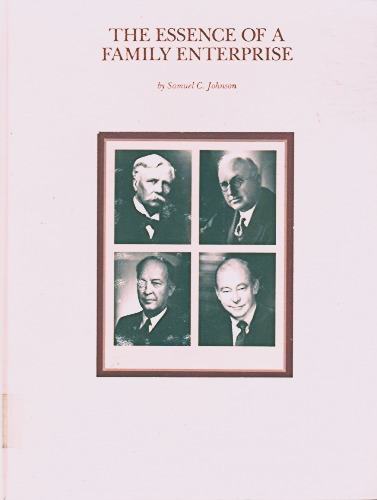
  • The Essence of a Family Enterprise by Samuel C. Johnson

    June 3, 2026

    ·

    Buy the Book: Print

    The book is a collection of essays, written for S.C. Johnson & Son, Inc.’s 100th anniversary celebration in 1986, reflecting on the philosophy and principles that built the company.

    The Essence of Family Enterprise book cover

    The Notes

    Continue Reading…

  • Weekend Reads – 5/29/26

    May 29, 2026

    ·

    Jon Petersen, CFP®

    Quote for the Week

    It seems a truism to say that the old-time common-stock investor was not much interested in capital gains. He bought almost entirely for safety and income, and let the speculator concern himself with price appreciation. Today we are likely to say that the more experienced and shrewd the investor, the less attention he pays to dividend returns, and the more heavily his interest centers on long-term appreciation. Yet one might argue, perversely, that precisely because the old-time investor did not concentrate on future capital appreciation he was virtually guaranteeing to himself that he would have it, at least in the field of industrial stocks. And, conversely, today’s investor is so concerned with anticipating the future that he is already paying handsomely for it in advance. Thus what he has projected with so much study and care may actually happen and still not bring him any profit. If it should fail to materialize to the degree expected he may in fact be faced with a serious temporary and perhaps even permanent loss. — Benjamin Graham, 1958 (source)

    Continue Reading…

  • Wise Words from Charley Ellis

    May 27, 2026

    ·

    Jon Petersen, CFP®

    Charley Ellis recognized that there were two different games being played in the stock market. The game the experts play differs from the game the amateurs play.

    When the amateurs try to play the experts’ game they frequently make mistakes and lose money. That’s not to say the experts are fantastic at making money. A few are but experts, on average, fail to beat the market too. So the majority of experts fall short of the market and the amateurs, emulating experts, do worse.

    Ellis’s solution is to play a different game entirely. The game amateurs should play, and many experts too, is built on a foundation of avoiding errors. Essentially, not losing. Fewer errors lead to better results.

    Ellis wrote this in his 1975 classic The Loser’s Game. In it, he used an analogy between tennis and investing. It turns out there are two different games in tennis too. The game the professionals play is not the same game as the one the amateurs play.

    The pros can be aggressive. They have the skill, precision, and experience to place shots just outside their opponent’s reach. They play a winner’s game. The match goes to the player who earns the most wins.

    Amateurs, however, often lose by trying to play like the pros, because it leads to unforced errors. It’s a loser’s game. Amateurs win in tennis by volleying until their opponent hits it into the net or out of bounds. They win by not losing.

    Continue Reading…

  • Weekend Reads – 5/22/26

    May 22, 2026

    ·

    Jon Petersen, CFP®

    Quote for the Week

    Every great crisis reveals the excessive speculations of many houses which no one before suspected, and which commonly indeed had not begun or had not carried very far those speculations, till they were tempted by the daily rise of price and the surrounding fever…

    They speculate with it in bubble companies and in worthless shares, just as they did in the time of the South Sea mania, when there were no banks, and as they would again in England supposing that banks ceased to exist. The mania of 1825 and the mania of 1866 were striking examples of this; the delirium of ancient gambling co-operated with the milder madness of modern overtrading. At the very beginning of adversity, the counters in the gambling mania, the shares in the companies created to feed the mania, are discovered to be worthless; down they all go, and with them much of credit.

    The good times too of high price almost always engender much fraud. All people are most credulous when they are most happy; and when much money has just been made, when some people are really making it, when most people think they are making it, there is a happy opportunity for ingenious mendacity. Almost everything will be believed for a little while, and long before discovery the worst and most adroit deceivers are geographically or legally beyond the reach of punishment. — Walter Bagehot (source)

    Continue Reading…

1 2 3 … 235
Next Page

Work with Me

Turn your financial goals into a personalized plan for the life you want with flat-fee financial planning and investment management…and keep more of your money working for you.

Let’s Talk

Get more weekly wisdom.

Sign up for my weekly newsletter. Join 1,000s of readers and never miss a post.

Newsletter Subscribe Form

Learning

  • Investor Library
  • Book Notes
  • Investor Quotes

Return Quilts

  • Asset Class Returns
  • S&P Sector Returns
  • International Stock Market Returns
  • Emerging Markets Returns
  • Historical Returns Data

Connect

  • Bluesky
  • Twitter
  • Facebook
  • RSS Feed
  • Home
  • About
  • Contact

© Novel Investor · All Rights Reserved · Terms of Use · Privacy Policy · Disclaimer