-
The Fish That Ate the Whale by Rich Cohen

Rich Cohen tells the story of a Russian immigrant, Sam Zemurray, who saw an opportunity in the banana business and seized it. Along the way, he out-hustled and out-innovated the giant of the industry, United Fruit.
-
Concentrated Investing by Benello, Van Biema, Carlisle
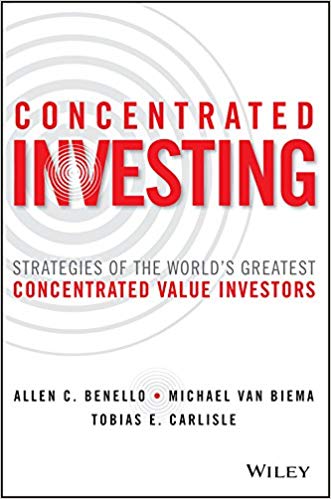
Concentrated Investing profiles eight investors with different investment styles to figure out the principles behind their returns. Was it due to their behavior, the source of capital, the number of investment, or position sizing? The authors answer those questions then look at what the data says.
-
The Zurich Axioms by Max Gunther
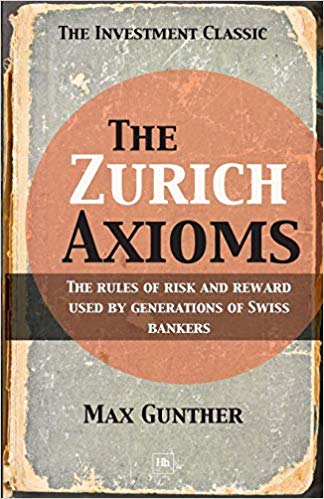
The Zurich Axioms is a book about managing risk and reward. Twelve “axioms” define how to think about risk and uncertainty in such a way that you’re more likely to be rewarded than not.
-
Confusion De Confusiones by Joseph De La Vega

Joseph De La Vega’s Confusion De Confusiones is the earliest known book on the trading practices of a stock market. Set as four separate conversations between three people, you get a sense of what investing and speculating was like in the mid to late 1600s.
-
The Little Book That Still Beats the Market by Joel Greenblatt
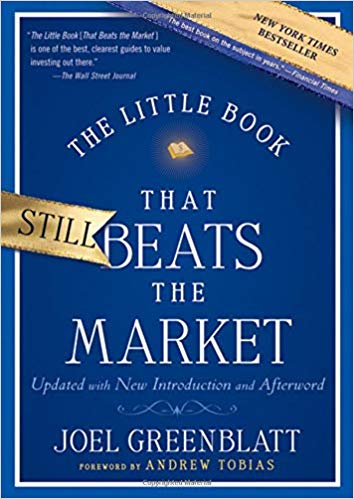
Joel Greenblatt’s Little Book delivers a crash course in value investing. He covers how to view the market, why most people fail to beat the market, metrics for quality and low priced stocks, and how his Magic Formula works.
-
How to Lie with Statistics by Darrell Huff
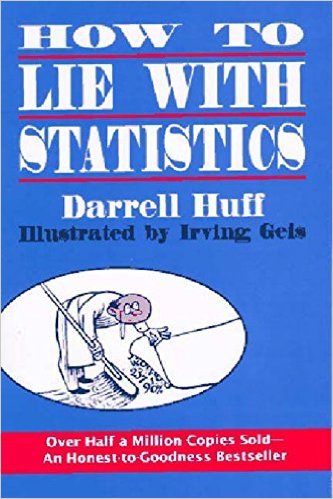
Darrell Huff’s book is about the long history of data deception. He explains the many ways data can be manipulated — to misrepresent facts, to tell a different story — in advertising, politics, and other areas and how to defend yourself from it.
-
Simple Wealth Inevitable Wealth by Nick Murray

Nick Murray delivers the timeless “simple truths” of investing that never change regardless of where things stand with the markets.
-
The Money Game by Adam Smith
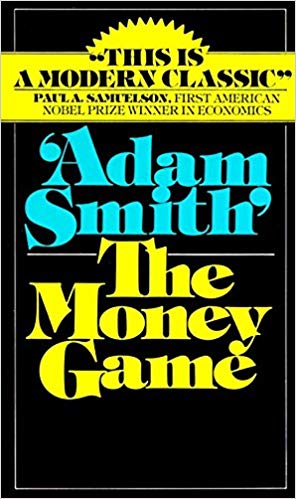
The Money Game is a series of stories on the games people play with money and markets. Told by Adam Smith (aka George Goodman), the stories uncover the emotion, error, myth, and irrationality that surrounds it all.
-
The Art of Speculation by Philip Carret

Based on a series of articles written for Barron’s in 1927, Philip Carret writes an extensive introduction to the stock market, while laying the groundwork for market cycles, economic cycles, value investing, biases, and behavior.
-
Why You Win or Lose: The Psychology of Speculation by Fred C. Kelly

Fred C. Kelly proposed that by acting counter — contrarian — to the general tendencies of most market participants, one avoids most typical mistakes, and succeeds at investing. Studying average investor mistakes presents a guide to future dangers.
-
The Little Book of Behavioral Investing by James Montier
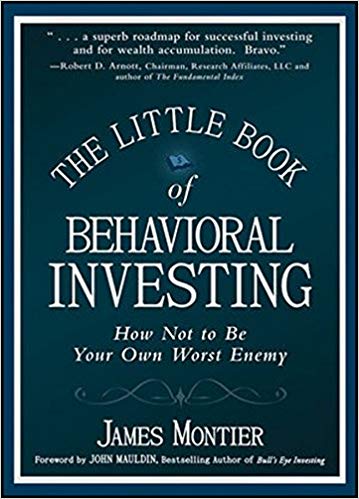
James Montier writes about the many ways investors are their own worst enemies. The book concentrates on the many repeated behavioral mistakes investors inflict on themselves that negatively impact returns in the process.
-
Why Don’t We Learn From History? by B.H. Liddell Hart

B. H. Liddell Hart wrote the book as a summary of the history of warfare. Rather than writing the lessons we learn from history, he inverts the message to the many lessons we fail to learn from history.

Book Notes
This page is a work in progress.
The page contains a list of notes from books. A sentence or two summarizes each book. Click the linked title to get the notes.
I have no idea how useful these book notes will be for you but they are immensely helpful for me. The notes are by no means all-inclusive and do not replace the book. It’s simply a list of thoughts and ideas from the book that struck me as interesting at the time of reading. If I read the book again today, the notes might look completely different.